
he right tool does not make you a better artist. But the wrong one will fight you every single day. It crashes during a client deadline. It exports a model with broken UVs that you miss until the engine build fails. It adds hours of busywork to a task that should take twenty minutes.
Ask any working game art designer what they actually care about in their software, and the answers are boring and practical. Stability. Speed. Interoperability. A short trip from idea to visible result. The flashy new feature that demoed beautifully at GDC means nothing if the tool cannot survive a production schedule.
This guide covers what professionals are actually using on shipped titles in 2026, not what trends on social media. It includes free options and paid ones, and it is honest about where each tool frustrates its users.
What Changed for Game Art Designers Since 2025
Three shifts have reshaped the tool landscape for game art designers in the past two years.
AI moved from threat to assistant.
The conversation has matured significantly. Artists are now using machine learning for the parts of the job nobody enjoys: retopology, texture variation, and upscaling legacy assets. The tools that added AI in a way that respects artist control have seen strong adoption. The ones that promised to replace the artist entirely have been largely ignored.
Real-time rendering became the truth.
Artists no longer work in a dull viewport and wait for a render to find out what their work actually looks like. The viewport in Unreal Engine 5, Unity 6, and even Blender now shows final-quality lighting, reflections, and materials as you sculpt and paint. This change has compressed iteration cycles that used to take hours into minutes.
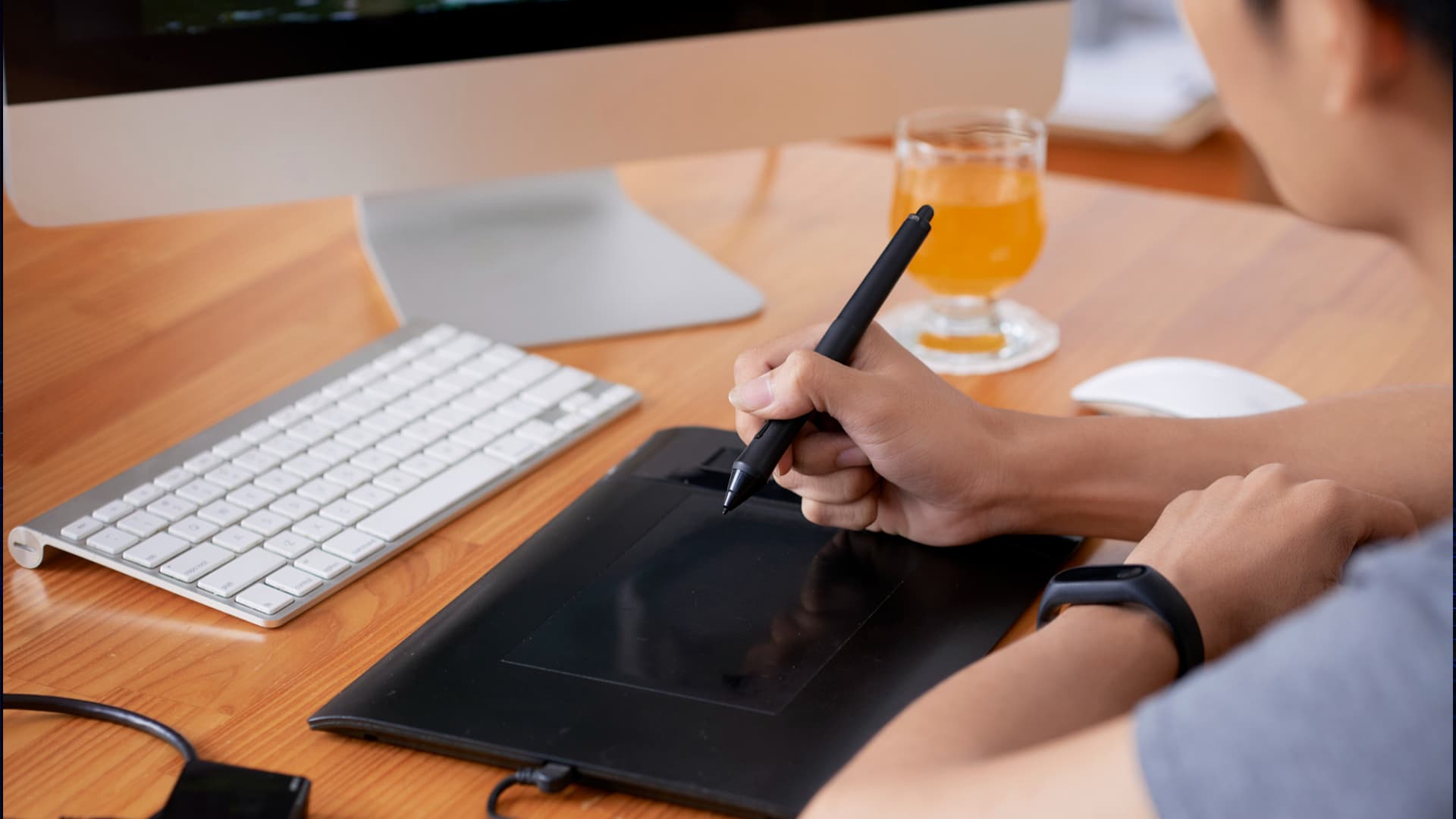
The tablet became a legitimate production device.
A growing number of professional game art designers do significant portions of their work on an iPad Pro. Not just concept sketches. Full sculpts, texture work, and even engine tasks through cloud streaming. The desk is no longer the only place real work happens.
Engines Where Your Art Lives
Your engine choice shapes your entire material workflow, your lighting approach, your shader logic, and your performance constraints. It is the most consequential software decision you will make.
Unreal Engine 5
Unreal Engine 5 remains the standard for anyone targeting high visual fidelity on PC and console. What makes it genuinely useful in 2026 is not the headline features. It is the real-time feedback loop.
Lumen handles global illumination directly in the viewport so you see exactly what the player will see. Place a light and the scene responds instantly, with no lightmap baking required. For environment artists, this fundamentally changes how you compose a scene because lighting iteration happens live.
Nanite allows you to import high-polygon sculpts directly without retopology or baking normal maps. Take a finished ZBrush sculpt, drop it into Unreal, and it renders immediately. The time saved per asset is measured in days across a full production.
The downside is hardware demand. Unreal Engine 5 is heavy on older workstations. Small projects can bloat quickly without discipline around shader complexity and draw calls. For game art designers aiming at current-generation consoles or high-end PC, Unreal is where the industry has settled.
Unity 6
Unity 6 is the practical pick for mobile, AR, and stylized projects. It runs comfortably on lower-specification machines. The Shader Graph lets artists build custom materials visually without writing code. The VFX Graph handles complex particle systems through a node-based interface built for visual thinkers.
Unity’s historical weakness was a rendering pipeline that felt behind Unreal. That gap has narrowed considerably in the 6.x releases. Stability has improved, documentation has grown more reliable, and the asset store remains a strong prototyping resource. For mobile titles or stylized indie games, Unity is still the pragmatic choice.
Godot 4.4
Godot is now a legitimate production engine rather than just an indie experiment. It is free and open source with no royalties and no license fees, which matters significantly for small studios and solo developers.
Its rendering pipeline produces excellent stylized 3D and best-in-class 2D output. The node-based shader editor is intuitive. The animation tools run deeper than most expect from open-source software. Several shipped indie titles in 2025 were built entirely in Godot, and the visual quality holds up against anything produced in Unity.
Godot cannot yet match Unreal for photorealism. But for game art designers working in artistic, non-photoreal styles, it is a legitimate primary engine.
3D Modeling Tools
This is where the majority of production hours go. The modeling tool you choose shapes your entire asset pipeline from day one.
Blender
Blender is the correct answer for most game art designers in 2026. It is free, it is stable, and its feature set matches or exceeds what Autodesk Maya offers for game production work.
The sculpting tools are capable enough that many character artists skip ZBrush entirely for everything except the final high-detail pass. Geometry Nodes let environment artists build procedural cities, forests, and props through node graphs. Instead of placing a thousand trees by hand, you build one graph that distributes them according to rules you define. The time savings on environment work are substantial.
The community is enormous. Every problem you will encounter has already been solved, documented, and turned into a tutorial. The 4.x releases have cleaned up the interface inconsistencies that plagued earlier versions. The gap with commercial alternatives shrinks with every release cycle.
ZBrush
ZBrush holds its ground for sculpting meshes with tens of millions of polygons. If you are a character artist who needs pore-level detail for a hero asset, nothing else matches it.
The brush system is so mature that working in it approaches muscle memory. Artists who have spent years in ZBrush can produce results faster in it than in any other sculpting tool available today. Maxon’s ownership has not disrupted the core toolset in the ways users feared when the acquisition was announced. The integration with Cinema 4D and Redshift is a bonus for artists who need high-quality renders for director approval or portfolio presentations.
The downside is cost. ZBrush requires a subscription or a substantial one-time purchase. For artists on a tight budget, Blender’s sculpting tools handle most tasks well enough.
Houdini
Houdini is now a tool for artists as much as it is for technical directors. The learning curve is real, and it thinks differently than any other 3D application. Everything is nodes. Everything is procedural.
Invest the time and you gain the ability to build generators that produce infinite asset variations from a few parameters. Need a hundred unique buildings for a city block? Build one generator and adjust sliders. Need cliff faces that tile naturally without visible repetition? Same workflow. Studios value Houdini skills highly, and artists who list it in their portfolio tend to get calls.
Nomad Sculpt
Nomad Sculpt brings serious 3D sculpting to tablets. It runs on iPads and Android devices and handles surprisingly complex meshes for a mobile application. Files export cleanly to Blender or ZBrush for refinement. For blocking out forms during a commute or sculpting stylized characters for mobile titles, it is a genuinely useful addition to the toolkit at a fraction of desktop software costs.
Texturing and Material Tools
The surface quality of your assets depends entirely on your texturing workflow. These tools determine how your models look when the light hits them in-engine.
Substance Painter
Substance Painter is the industry standard for texturing, and every professional game art designer should know it well.
Layer-based texturing with smart materials that automatically respond to an object’s edges, cavities, and surface curvature. A real-time PBR viewport that matches engine output closely. A large library of community materials and brushes. The non-destructive workflow means you can change colors, roughness values, or material assignments at any point without starting over from scratch.
The frustrations are real: performance suffers on very complex assets with many texture sets, and Adobe’s subscription pricing is hard for freelancers and small studios to stomach. But the tool is so deeply embedded in production pipelines across the industry that not knowing it closes doors.
Substance Designer
Substance Designer builds procedural materials through node graphs. A single graph generates infinite variations of brick, concrete, metal, or organic surfaces with parameters you expose for easy team-wide adjustment.
This saves both texture memory and artist time across a full project. One brick material graph with sliders for brick color, mortar width, weathering, and moss coverage replaces dozens of unique hand-painted textures. Designer requires systematic, logical thinking. Those who click with node-based workflows become the person the team relies on for consistent, flexible materials at scale.
Quixel Mixer
Quixel Mixer is free within the Epic Games ecosystem. It is not a full Substance Painter replacement, but for environment artists working on realistic scenes it is excellent. You paint with real-world scanned materials from the Megascans library and preview results in Unreal Engine almost immediately. If you are already working in the Unreal pipeline, Mixer is a natural addition that costs nothing.
Marmoset Toolbag
Marmoset Toolbag serves two specific purposes: map baking and portfolio presentation.
Its baking engine consistently produces cleaner results than in-engine tools, particularly for complex meshes with intersecting geometry. Normal maps, ambient occlusion, and curvature bakes from high-poly to low-poly come out with fewer artifacts and better edge handling than most alternatives.
For portfolio work, Toolbag is the recognized standard. A well-lit Marmoset turntable with thoughtful material work still signals professionalism to every hiring manager in the industry. The renderer is fast. The material editor is straightforward. It does two things well and does not try to be more than it is.
AI Tools That Earn Their Place
The AI tools that working artists actually use in 2026 are narrow and practical. They handle mechanical busywork. They do not generate final production art.
AI retopology has improved to the point where ZBrush’s ZRemesher and Blender’s Quad Remesher plugin produce animation-ready topology from high-poly sculpts with minimal cleanup. For background characters and organic props, the results are production-ready. For hero characters, hand retopology still yields better edge flow around deformation areas like the face and hands. But the AI baseline cuts hours from the process.
Generative fill in Photoshop, powered by Adobe Firefly, handles texture extension and variation cleanly. Need to make a photo-sourced texture tile across a larger surface? Generative fill expands it naturally. Need ten variations of a rusted metal panel from a single reference? Generate them in minutes and select the best. The output needs human review, as AI occasionally produces unnatural patterns, but the time savings on repetitive texture work are meaningful.
AI upscaling tools like Topaz Gigapixel let studios repurpose existing assets at higher resolutions without rebuilding them from scratch. A 2K render becomes a clean 8K image suitable for marketing materials. This matters for small studios whose asset libraries were built at lower resolutions and now need to present work at modern display standards.
Concept generation tools like Midjourney are used in pre-production for visual exploration, not final deliverables. An art director can explore ten visual directions quickly, then brief human concept artists with clear reference imagery. The AI output does not ship. It compresses the mood board phase from weeks to hours.
Tablets and Mobile Tools
A growing number of professionals work on tablets for significant portions of their pipeline.
Procreate on iPad dominates for 2D concept work. Its brush engine is responsive and pressure-sensitive in a way that feels close to traditional media. The layer system is robust for professional use. The time-lapse recording feature has become the standard way artists share process content on social media, which matters for portfolio visibility.
Nomad Sculpt has already been covered in the modeling section, but it is worth repeating here: for blocking sculptural forms away from the desk, nothing else on a tablet comes close.
Affinity Designer and Affinity Photo from Serif are the preferred alternatives to Adobe’s subscription model for many freelance artists. They offer comparable feature depth for a one-time purchase, run well on both iPad and desktop, and move files seamlessly between devices. For UI design, texture painting, and concept work, they cover most of what artists need day-to-day.
What Makes a Toolkit Actually Work
A great tool set for game art designers has three qualities that matter more than any feature list.
The tools talk to each other.
You sculpt in one application, retopologize in another, UV in a third, texture in a fourth, and bring everything into an engine. If each of those steps requires format conversions, manual fixes, or constant workarounds, your pipeline is broken before a project even begins. The tools that dominate in 2026 are the ones with mature, reliable interchange formats. FBX remains the standard for mesh transfer. USD is gaining ground but is not yet universal across all engines and DCC applications.
The viewport is honest.
What you see while working should match what the engine produces. Tools that show a prettier version in the viewport than what actually exports waste time and erode trust in the pipeline. Unreal Engine, Unity, Blender, and the Substance suite all now prioritize viewport accuracy, and artists have adopted them in part because of this.
The iteration loop is short.
Every second of waiting breaks creative flow. Tools that update instantly keep artists in the mental state where good work happens. Real-time rendering has been the single biggest quality-of-life improvement for game art designers in the past five years. The less you wait, the more you make, and the better the decisions you make about what you are building.
Building Your Personal Stack
There is no single correct tool set. The stack that works for a AAA environment artist is the wrong choice for a solo developer making a 2D mobile game.
For AAA and high-end indie production, the standard stack is Unreal Engine 5, Blender or Autodesk Maya, ZBrush, Substance Painter and Substance Designer, and Houdini for procedural asset work.
For mobile and mid-scale indie projects, Unity or Godot with Blender and Substance Painter handles the majority of production needs at significantly lower cost.
For 2D work, Procreate, Affinity Designer, and Aseprite for pixel art form a strong and affordable foundation.
The trap to avoid is chasing new tools instead of mastering the ones already in your hands. A game art designer who knows Blender deeply will outproduce someone who has dabbled in five different modeling applications. Depth beats breadth every time. Master your current stack first, then evaluate whether a new tool solves a real production problem or just looks impressive in a demo video.
The tools exist to serve the art. When you stop thinking about the software and simply make things, you have built the right kit.
Frequently Asked Questions
What tools do game art designers use most in 2026?
The most widely used tools among professional game art designers in 2026 are Unreal Engine 5, Blender, ZBrush, Substance Painter, and Marmoset Toolbag. The specific combination depends on the production type, with AAA studios leaning toward Unreal and ZBrush while indie and mobile teams often use Unity or Godot with Blender.
Is Blender good enough for professional game art?
Yes. Blender is used in professional game art production at studios of all sizes. Its sculpting, UV unwrapping, and procedural modeling tools through Geometry Nodes are mature enough for most production tasks. For very high-detail character sculpting, ZBrush still offers advantages, but Blender handles the rest of a typical game art pipeline reliably.
Do game art designers need to learn Substance Painter?
Substance Painter is the industry standard for asset texturing and knowing it is essentially required for most game art roles. Its non-destructive workflow, PBR viewport, and smart material system are embedded in pipelines across AAA studios and indie teams. Not knowing it limits the roles available to a candidate.
What is the best free tool for game art design?
Blender is the best free tool available for 3D game art production. For texturing, Quixel Mixer is free within the Unreal/Epic ecosystem. Godot is a free, fully-featured engine suitable for production use. Together, Blender plus Godot plus Quixel Mixer forms a complete, zero-cost game art pipeline.
How is AI being used in game art production in 2026?
AI is being used in game art production for specific, mechanical tasks: automatic retopology through tools like ZRemesher and Quad Remesher, texture extension and variation through Photoshop’s generative fill, upscaling legacy assets with tools like Topaz Gigapixel, and accelerating concept mood boarding through image generation tools. AI is not being used to generate final production art in professional pipelines.
Should game art designers learn Houdini?
Learning Houdini is not essential for every game art designer, but it is highly valuable for those working in environment art or technical art roles. Houdini’s procedural, node-based approach enables artists to build generators that produce unlimited asset variations from a set of parameters, which is particularly useful for large open-world projects. Studios actively seek candidates with Houdini experience.
What tablet apps do game art designers use?
The most used tablet applications among game art designers are Procreate for 2D concept work and Nomad Sculpt for 3D blocking and stylized sculpting. Affinity Designer and Affinity Photo are popular alternatives to Adobe applications for artists who prefer a one-time purchase model. These tools are used for genuine production work, not just sketching, particularly as iPad Pro hardware has grown more capable.
Ready to build your career in game art? Whether you are just starting out or optimizing a professional workflow, contact Trifleck today. We help artists choose the right tools, build strong portfolios, and land the roles they are aiming for.