Trust, to an AI search engine, isn’t a feeling. It’s a set of checkable signals: who wrote this, can any of it be verified, does it agree with what other credible sources say, and has anyone bothered to update it recently.
For founders, SaaS teams, marketing leaders, and technology decision-makers, the commercial question is straightforward. When a prospective buyer asks an AI system about a problem your company solves, does your website contribute evidence to the answer, or does the system rely on competitors, publishers, forums, and product directories instead?
Ask a marketing team to define a premium brand identity and you’ll get an answer about fonts, photography, and maybe a new logo. Ask the engineering team down the hall the same question and you’ll get a completely different list: uptime, load speed, whether the data in the CRM matches what’s on the invoice. Both are right.
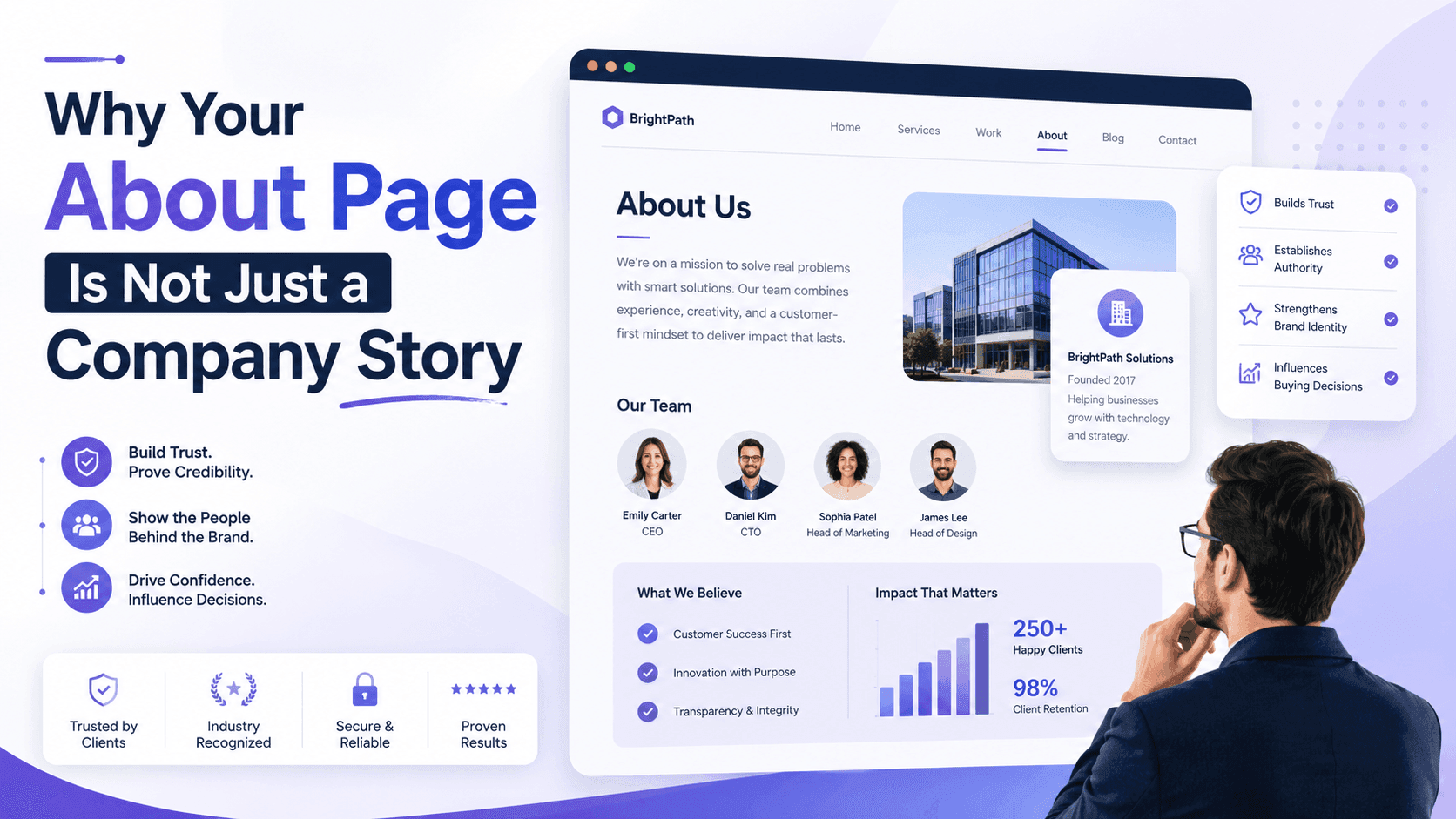
A visitor may find your company through a service page, blog post, ad, or search result. Yet before contacting you, they may open the About page.
A service page has two jobs. It must help the right people find your business, and it must give them enough confidence to contact you.
A 12-person company lands a client that doubles its workload overnight. The obvious move is to hire. But hiring takes time, salary and benefits add fixed cost that doesn’t disappear if the client leaves in six months, and the new person still needs weeks of ramp-up before they’re actually productive. Meanwhile the work is due now.
It’s 7:40 on a Tuesday morning and a Tampa landscaping crew leader is standing in a driveway with no idea where he’s supposed to be. The job list was texted to him the night before, but a customer called in a change, the dispatcher forwarded it to the wrong number, and now two crews are headed to the same address while a job in Brandon sits unassigned. Nobody did anything wrong exactly. The system just wasn’t built to handle five moving parts at once.
A sales rep in Ybor City closes a deal over the phone. The customer’s information sits in a spreadsheet. Meanwhile, the same customer filled out a contact form on the website three days earlier, and that submission is sitting in a completely different inbox, unread.
Companies rarely notice their backend is failing them until growth exposes it. The website looks fine, the app still works, and the team is closing more deals than last year. Then reports start taking longer to generate, a new integration breaks something unrelated, and the engineering team spends more time patching old code than shipping new features. That pattern usually points to one place: the backend.
Most businesses do not decide to build a booking system because they woke up excited about software. They decide because a front desk team is drowning in phone calls, a spreadsheet double-booked two clients on the same afternoon, or a founder realized that every competitor with a working online calendar is winning customers who simply wanted to book something without waiting for a reply. That frustration is usually the real starting point for booking platform development, and it is worth naming early, because it shapes almost every decision that follows.
A junior employee accidentally deletes a client record. A contractor exports a spreadsheet full of customer payment details they were never supposed to see. A former team member logs back into a system three weeks after leaving the company, because nobody remembered to revoke their access. None of these are hypothetical edge cases. They happen constantly, and almost every time, the root cause is the same: the software wasn’t built with proper user roles permissions software architecture in mind.
Most product teams don’t find out their app or platform is hard to use until the support tickets start piling up, or worse, until users quietly stop opening it. By the time a founder or product owner asks “why is our churn so high” or “why do people abandon signup halfway through,” the real answer usually traces back to one thing: the digital product user experience was never designed with the actual user in mind. It was designed around internal assumptions, a rushed roadmap, or a feature list that looked impressive in a pitch deck but never got tested against a real person trying to get something done.
The champagne moment for most digital products happens at launch. The app is live in the store, the new website is pushed to production, the internal team gets a congratulatory email, and everyone moves on to the next priority.
Most software projects don’t fail during development. They fail before a single line of code gets written, in the weeks where scope, budget, and technical direction should have been settled but weren’t.
Manual business processes often feel manageable when a company is small.
Let’s turn your vision into reality. Partner with our team of creators, strategists, and engineers to build something extraordinary.