
The average patient today expects their healthcare provider to be as accessible as their bank, their ride-share, and their grocery delivery. That expectation is no longer unreasonable. Healthcare app development has matured to a point where clinics, hospitals, and digital health startups can offer real-time consultations, personalized care plans, and continuous health monitoring from a single application on a smartphone.
Yet many healthcare providers are still running on legacy systems, paper-based records, and phone-in appointment booking. That gap between patient expectation and provider capability is exactly where healthcare app development creates its greatest value.
At Trifleck, we have worked with healthcare providers, digital health startups, and enterprise clients to build apps that solve real operational problems and genuinely improve the lives of patients. This guide draws on that experience to give you a complete, honest picture of what modern healthcare app development involves, what it costs, and what it can achieve.
What Is Healthcare App Development?
Healthcare app development is the process of designing, building, and deploying mobile or web-based software applications that support the delivery, management, or monitoring of healthcare services. These applications serve two primary audiences: patients who need to access and manage their own care, and providers who need tools to deliver that care efficiently and accurately.
The global digital health market was valued at approximately $211 billion in 2022 and is projected to reach over $660 billion by 2030, according to Grand View Research. That growth is driven in large part by demand for mobile health (mHealth) applications, wearable integrations, and telemedicine platforms.
Healthcare apps fall into several broad categories:
- Patient-facing apps allow users to book appointments, access their electronic health records (EHR), communicate with clinicians, track medications, and monitor chronic conditions. Platforms like MyChart, built on Epic Systems infrastructure, are a mature example of this category.
- Provider-facing apps help clinicians manage schedules, document patient encounters, review diagnostic data, and coordinate care across departments or facilities.
- Remote patient monitoring (RPM) apps collect physiological data from wearable devices such as Apple Watch, Fitbit, or dedicated medical-grade sensors, and transmit that data to a care team in real time.
- Mental health apps such as BetterHelp and Calm represent a fast-growing niche that blends clinical intervention with consumer wellness tools.
Understanding which category your product sits in is the first decision in any healthcare app development project, because it determines the technical architecture, the regulatory pathway, and the user experience design approach.
How Healthcare Apps Improve Patient Experience
The patient experience has historically been measured by clinical outcomes and provider satisfaction surveys. Digital health has introduced a new set of metrics: time-to-care, appointment adherence, medication compliance, and patient-reported outcomes between visits.
Reducing friction at every touchpoint.
Before digital scheduling tools became widespread, booking a specialist appointment in the United States took an average of 26 days, according to a Merritt Hawkins survey. Healthcare apps with real-time scheduling, automated reminders, and calendar integrations directly address that delay. Patients who receive SMS or push notification reminders are 29 percent less likely to miss an appointment, according to research published in the Journal of Medical Internet Research.
Extending care beyond the clinic.
Telemedicine functionality inside a healthcare app allows a patient in a rural part of West Texas to consult an endocrinologist in Houston without a six-hour round-trip drive. During the COVID-19 pandemic, platforms like Teladoc Health processed over 10 million virtual visits in 2020 alone. That surge validated a simple truth: patients will use telehealth if access is genuine and the experience is intuitive.
Enabling patients to act on their own data.
When a patient with Type 2 diabetes can see their blood glucose trends alongside their dietary logs and step count in a single app, they are better equipped to have a productive conversation with their care team. EHR access, wearable integration through APIs like Apple HealthKit and Google Fit, and in-app educational content all contribute to what researchers call patient activation, the degree to which individuals take ownership of their health decisions.
Improving medication adherence.
Non-adherence to prescribed medication is estimated to cost the U.S. healthcare system $300 billion annually, per the National Community Pharmacists Association. Medication reminder features with push notifications, refill tracking, and drug interaction alerts directly address a problem that is simultaneously a patient safety issue and an operational burden for healthcare providers.
Key Features That Define a High-Quality Healthcare App
Not every feature belongs in every healthcare app. Scope creep is one of the most common reasons development budgets overrun. That said, certain capabilities have proven consistently valuable across product categories.
Telemedicine and video consultation require HIPAA-compliant video infrastructure, low-latency audio, and thoughtful UX for both the patient and the clinician. WebRTC-based solutions are the current standard for browser-based video, while native SDKs from providers like Twilio or Vonage are common choices in mobile builds.
EHR integration typically involves connecting to established platforms such as Epic, Cerner, or Meditech via HL7 FHIR (Fast Healthcare Interoperability Resources) APIs. FHIR R4 is now the dominant standard in the United States following CMS and ONC interoperability rules that came into effect in 2021.
Appointment scheduling with automated reminders should include logic for waitlists, provider availability rules, and multi-channel notifications (push, SMS, email). Calendar sync with Google Calendar and Apple Calendar improves completion rates.
Secure in-app messaging between patients and care teams, often called asynchronous care or e-visits, reduces unnecessary phone calls and allows clinicians to respond on their own schedule without compromising care continuity.
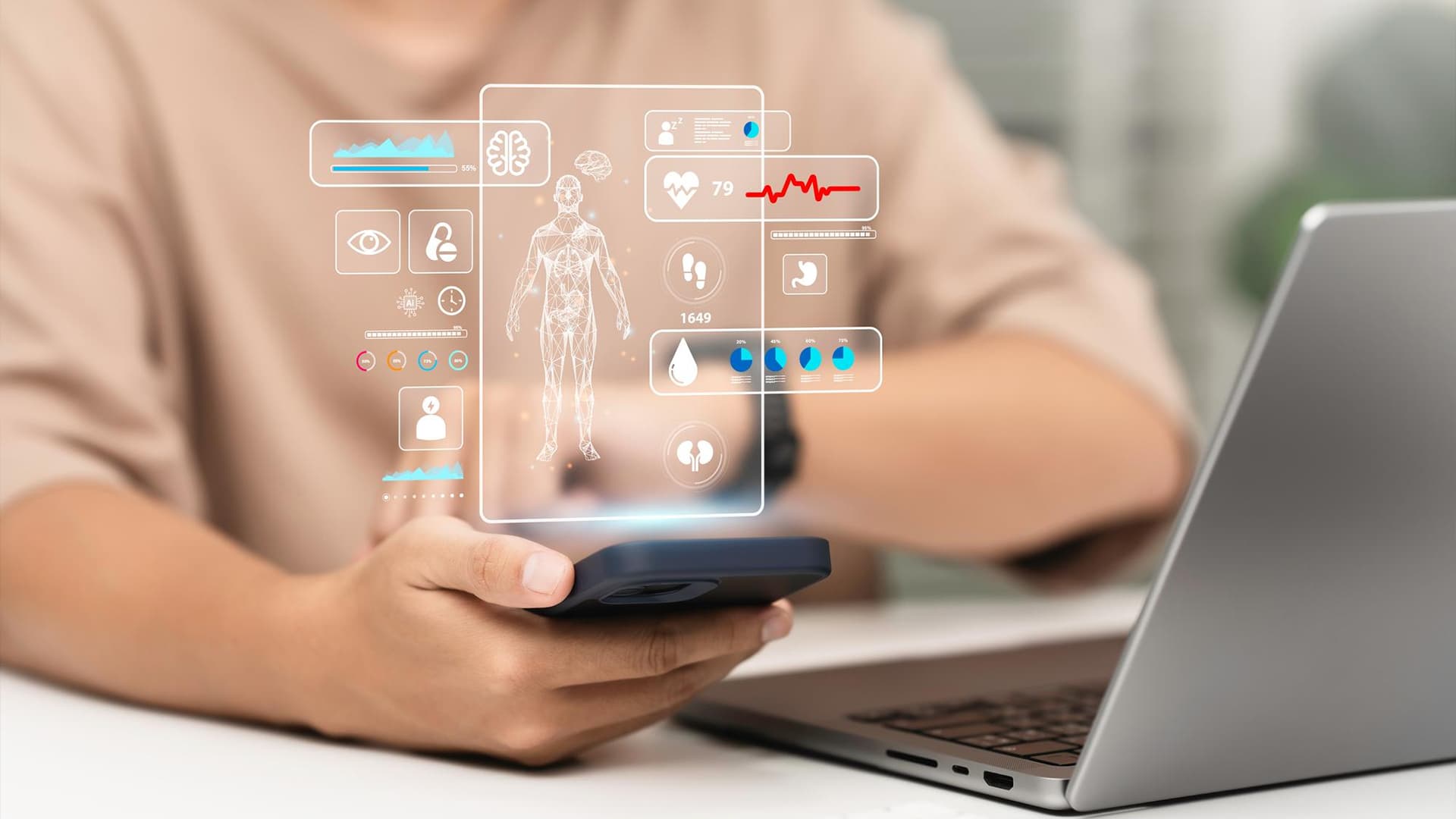
Health data dashboards that aggregate wearable data, lab results, and self-reported symptoms give both patients and providers a longitudinal view of health that a single clinic visit cannot provide.
AI-powered symptom checkers and triage tools use natural language processing and clinical decision support algorithms to help users understand when a symptom warrants an urgent visit versus a watchful wait. These tools, when built responsibly with validated clinical content, reduce unnecessary emergency department visits.
The Role of AI and Machine Learning in Healthcare App Development
Artificial intelligence is not a single technology but a category of capabilities, and its application in healthcare app development ranges from the straightforward to the genuinely transformative.
Natural language processing (NLP) powers clinical documentation tools that transcribe physician-patient conversations and populate structured notes automatically. Companies like Nuance, acquired by Microsoft in 2022, have brought this capability to mainstream EHR platforms.
Predictive analytics models trained on large clinical datasets can identify patients at elevated risk for hospital readmission, sepsis, or disease progression. These models, when integrated into provider-facing apps, allow care teams to prioritize interventions before a crisis develops.
Computer vision applied to medical imaging, from radiology to dermatology, enables AI-assisted diagnosis at a scale no team of human radiologists could match. The FDA has cleared over 500 AI-enabled medical devices as of 2024, many of them software-as-a-medical-device (SaMD) applications.
Personalized health recommendations generated by machine learning models that analyze a user’s historical data, lifestyle inputs, and clinical profile can improve engagement and outcomes in chronic disease management programs.
Data Security, HIPAA, and Regulatory Compliance
Security and compliance are not features to be added at the end of a healthcare app development project. They are architectural decisions made at the beginning.
HIPAA (Health Insurance Portability and Accountability Act)
Governs the handling of protected health information (PHI) for covered entities and their business associates in the United States. A HIPAA-compliant healthcare app requires end-to-end encryption for data in transit and at rest, role-based access controls, audit logging, a signed Business Associate Agreement (BAA) with every third-party service provider handling PHI, and documented breach notification procedures.
GDPR (General Data Protection Regulation)
Applies to any application processing the personal data of individuals in the European Union, regardless of where the app developer is based. Healthcare data is classified as a special category under GDPR, attracting heightened obligations around consent and data minimization.
FDA regulation
Applies to software that meets the definition of a medical device. The FDA’s Digital Health Center of Excellence has published guidance distinguishing administrative healthcare applications (not regulated) from clinical decision support tools and diagnostic software (regulated). Misclassifying your app is a compliance risk with serious consequences.
ISO 27001 certification and SOC 2 Type II
reports are increasingly expected by enterprise healthcare clients and hospital procurement teams as evidence that a development partner maintains robust information security management practices.
Trifleck approaches every healthcare project with a compliance-first methodology. That means completing a regulatory classification assessment before a single line of code is written, implementing HIPAA technical safeguards in the system architecture, and conducting penetration testing before launch.
How Much Does Healthcare App Development Cost?
Cost is always context-dependent, but the following ranges reflect current market realities based on project complexity.
A basic healthcare app with appointment scheduling, a patient portal, and push notifications typically costs between $40,000 and $80,000 to develop from scratch, depending on the development team’s location and the quality of the UX design.
A mid-complexity app that adds telemedicine video, EHR integration via FHIR APIs, and medication management can range from $100,000 to $250,000.
An enterprise-grade platform with AI-powered features, custom analytics dashboards, multi-provider support, and a full compliance program can exceed $500,000.
These are development costs only. Ongoing hosting, security audits, HIPAA compliance monitoring, and iterative feature development represent additional annual expenditures typically between 15 and 20 percent of the initial build cost.
Trifleck offers a transparent app cost calculator that breaks down estimates by feature set so you can make informed decisions before committing to a scope. Understanding what drives cost allows you to prioritize intelligently, building a minimum viable product that tests your assumptions before investing in full-scale development.
Calculate your app development cost here: https://www.trifleck.com/app-cost-calculator
Choosing the Right Healthcare App Development Partner
The healthcare industry has little tolerance for technical failure. A poorly built app does not just result in poor reviews on the App Store. It can result in missed diagnoses, medication errors, data breaches affecting thousands of patients, or regulatory action.
When evaluating a development partner for a healthcare project, ask for demonstrated experience with HIPAA-compliant architectures, FHIR API integrations, and healthcare-specific UX challenges such as accessibility for elderly or visually impaired users. Ask for references from clients in similar clinical domains. Review their security practices and ask whether they carry relevant certifications.
Trifleck brings a dedicated healthcare practice with experience across telemedicine platforms, chronic disease management apps, and hospital patient engagement tools. Our process begins with a discovery phase that maps your clinical workflows, identifies compliance requirements, and defines success metrics before any design or development work begins.
Conclusion
Healthcare app development is one of the most consequential areas of software engineering today. Done well, it removes barriers between patients and the care they need, gives clinicians better tools to do their jobs, and generates data that improves population health outcomes over time. Done poorly, it creates security vulnerabilities, regulatory liabilities, and a poor patient experience that erodes trust.
The difference between those two outcomes comes down to expertise, process, and genuine understanding of the clinical and regulatory environment in which these applications operate.
Frequently Asked Questions
What is the first step in building a healthcare app?
The first step is a discovery and compliance assessment. Before any design begins, you need to determine whether your app will handle protected health information (PHI), whether it qualifies as a medical device under FDA guidance, and which regulatory frameworks apply to your target market. Skipping this step leads to expensive rework later.
How long does it take to develop a healthcare app?
A basic patient portal or appointment scheduling app takes approximately three to five months from kickoff to launch. A telemedicine platform with EHR integration typically requires six to nine months. A complex AI-enabled diagnostic or monitoring platform may require twelve to eighteen months, including clinical validation.
What makes a healthcare app HIPAA compliant?
HIPAA compliance requires end-to-end encryption for all PHI, role-based access controls that limit data exposure to authorized users, comprehensive audit logs, a Business Associate Agreement with every third-party vendor, and a documented incident response plan. Compliance is an ongoing operational commitment, not a one-time certification.
Can a healthcare app replace in-person doctor visits?
No. Healthcare apps extend and enhance care delivery, but they do not replace clinical judgment exercised in person. Telemedicine is well-suited for follow-up consultations, management of stable chronic conditions, behavioral health support, and initial triage. Emergencies, complex diagnostics, and physical examinations require in-person care.
What is FHIR and why does it matter for healthcare apps?
FHIR (Fast Healthcare Interoperability Resources) is a standard developed by HL7 International for exchanging electronic health records between systems. It matters because U.S. federal regulations now require major EHR platforms to support FHIR R4 APIs, enabling healthcare apps to access patient data from systems like Epic or Cerner without proprietary integrations. This has significantly reduced the cost and complexity of building connected healthcare applications.
How do healthcare apps handle data security?
Reputable healthcare apps use TLS 1.2 or higher for data in transit, AES-256 encryption for data at rest, multi-factor authentication, and automatic session timeouts. All third-party services handling PHI must sign a Business Associate Agreement under HIPAA. Regular penetration testing and vulnerability assessments are standard practice for mature healthcare development teams.
What features should a mental health app include?
A well-designed mental health app should include secure messaging between patients and therapists, evidence-based self-guided exercises such as cognitive behavioral therapy (CBT) modules, mood tracking, crisis resources and emergency contact routing, and strict privacy controls. Engagement design must be handled carefully; features that encourage compulsive use are counterproductive in a mental health context.
Is healthcare app development regulated by the FDA?
Only in certain circumstances. The FDA regulates software that functions as a medical device, meaning software intended to diagnose, cure, treat, or prevent disease, or that analyzes patient data to inform clinical decisions. General wellness apps, administrative tools, and appointment scheduling software typically fall outside FDA jurisdiction. The FDA’s Digital Health Policy Navigator is a useful starting resource for classification questions.