
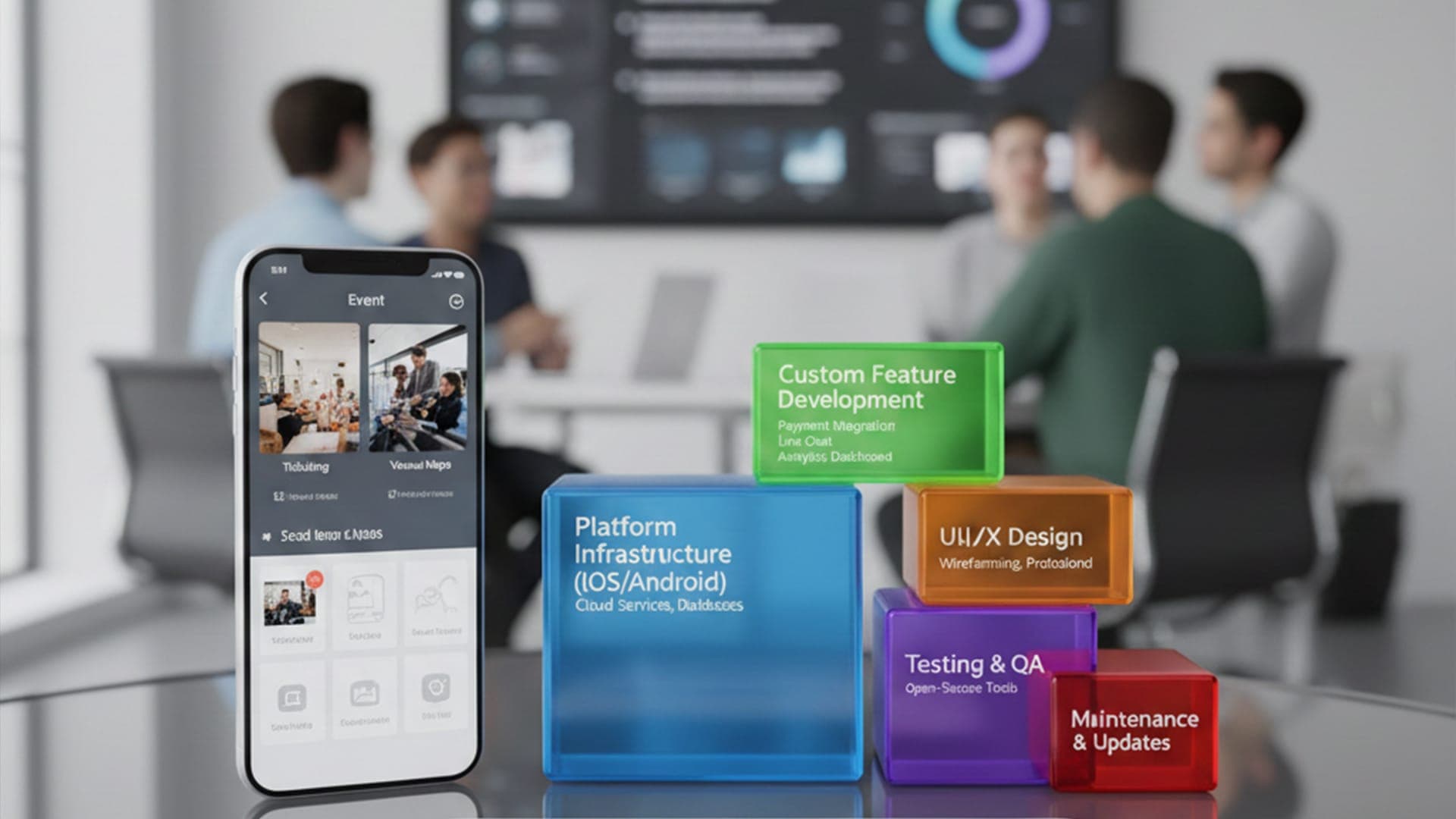
The global events industry manages millions of conferences, trade shows, corporate meetings, and virtual experiences every year. As digital adoption grows, event organizers increasingly rely on mobile and web applications to handle registrations, ticketing, schedules, and real-time communication. Industry reports show that a majority of event professionals now use event technology to improve attendee experience and operational efficiency, while many organizations manage multiple events annually using the same digital platform.
This shift has made event management apps a core business tool rather than a convenience. However, development costs vary widely, often confusing decision-makers during the planning phase. Some apps are built with basic scheduling tools, while others support large-scale ticketing, analytics, live updates, and global audiences. These differences directly affect timelines, infrastructure, and long-term investment.
Understanding what drives these costs is essential before starting development. This is where tools like an event management app cost calculator become valuable. By breaking costs down by features, platforms, and scalability needs, such tools help businesses align budgets with real requirements instead of assumptions. Today, we’ll explain exactly how event management app costs are structured, what factors matter most, and how to plan a realistic budget for long-term success.
What Is an Event Management App?
An event management app is a digital solution designed to plan, organize, and manage events efficiently. It serves both event organizers and attendees by centralizing event-related tasks.
For organizers, the app helps with planning, ticketing, promotions, and analytics. For attendees, it provides event details, schedules, notifications, and sometimes networking tools. Because these apps serve different user roles, development costs vary based on how complex the app needs to be.
Common Use Cases for Event Management Apps
Event management apps are used across many industries. Corporate teams use them for conferences and training sessions. Wedding planners rely on them for guest lists and schedules. Educational institutions use them for seminars and workshops. Meanwhile, large-scale events like festivals and expos depend on these apps to manage thousands of users at once.
Each use case affects cost differently. For example, a private event app may need fewer features, while a large public event may require high scalability and advanced integrations. An event management app cost calculator helps compare these scenarios early in the planning stage.
How Event Size Impacts App Development Costs
The size of an event directly affects how complex the app needs to be. Larger audiences require more planning, stronger infrastructure, and added safeguards.
Small and Private Events
Apps built for small events, such as workshops or private gatherings, usually need fewer features. User numbers are limited, and performance demands are lower. As a result, development and hosting costs stay manageable. An event management app's cost calculator often shows lower ranges for these projects because they do not require heavy scalability or advanced security layers.
Medium to Large Public Events
Public events like conferences and expos involve hundreds or thousands of users. These apps must handle peak traffic, real-time updates, and ticket scanning. That increases backend complexity and testing time. In these cases, cost calculators help teams estimate infrastructure needs more accurately.
Multi-Day and Multi-Location Events
Events spread across several days or locations need advanced scheduling, user segmentation, and location-based updates. These features increase both development and maintenance costs.
Key Features That Influence Development Costs
Features are the biggest cost driver when building an event management app. The more functionality you add, the more time and expertise are required to develop it.
Basic Features
Basic features form the foundation of most event management apps. These usually include user registration and login, event listings, schedules, and push notifications. An admin panel is also essential for managing content and users.
Apps with only basic features are quicker to build and cost less. They work well for small events or businesses testing an idea. Many teams use an event management app cost calculator to estimate the budget for this entry-level version.
Advanced Features
Advanced features improve user experience and add operational value. These include ticket booking, payment processing, QR code check-ins, and real-time notifications. Event analytics and reporting tools also fall into this category.
These features increase development time because they require backend logic, security measures, and third-party integrations. As a result, costs rise. Still, many organizers find the investment worthwhile because these tools reduce manual work and improve event flow.
Premium and Custom Features
Premium features are often built for large or recurring events. Examples include live streaming, in-app networking, AI-based recommendations, and white-label branding. Custom features designed for specific business needs also fall into this group.
Because these features require tailored development, they significantly increase costs. This is where an event management app cost calculator becomes especially useful, as it helps forecast expenses before committing to custom builds.
Platforms and Technology Choices
The platform you choose plays a major role in development costs. Different platforms require different tools, skills, and timelines.
Native vs Cross-Platform Development
Native apps are built separately for iOS and Android. They offer strong performance and deep access to device features. However, developing two separate apps increases cost.
Cross-platform development uses a single codebase for both platforms. Frameworks like Flutter or React Native reduce development time and cost while still delivering solid performance. Many businesses use an event management app cost calculator to compare native and cross-platform options.
Web-Based Event Management Solutions
Some organizations choose web-based solutions or Progressive Web Apps (PWAs). These apps run in a browser and work across devices. They are often cheaper to build and maintain, but may lack some native features.
Web solutions are a good option for internal events or limited budgets. Still, they may not suit events that rely heavily on mobile-specific features.
Design and User Experience Costs
Design is more than visual appeal. In event management apps, clear navigation and usability are critical.
UI/UX Design Complexity
Simple designs based on templates cost less and are faster to implement. Custom designs, on the other hand, require more planning, testing, and iteration. Accessibility considerations also add to design time but improve usability for all users.
Good design reduces confusion during live events. While it adds to upfront costs, it often saves money later by reducing support issues.
Branding and Customization
Custom branding allows organizers to align the app with event themes and sponsors. This includes custom colors, logo designs, and layouts. While branding adds cost, it improves professionalism and sponsor value.
Many teams factor branding into their estimates using an event management app's cost calculator to avoid surprises later.
Backend Development and Infrastructure
The backend is the engine that powers the app. It handles data, logic, and performance.
Server and Database Setup
Backend development includes setting up servers, databases, and APIs. Cloud hosting is common because it offers flexibility and scalability. Costs vary based on data volume and usage.
Secure data handling is also critical, especially for payments and personal information. This adds development and compliance costs.
Scalability and Performance
Event apps often face traffic spikes during registration and live sessions. Building for scalability ensures the app remains stable under load. Load testing and performance optimization increase development costs but prevent failures during critical moments. An event management app's cost calculator often includes scalability factors to help teams plan realistically.
Security and Compliance Considerations
Security is a critical cost factor, especially when handling payments and personal data.
User Data Protection
Event apps collect names, emails, and sometimes payment details. Securing this data requires encryption, secure authentication, and regular audits. These steps add development time but reduce legal and reputational risks.
Payment Security Standards
If the app processes payments, it must follow industry security standards. This often means using trusted payment gateways and performing extra testing. An event management app cost calculator that includes security requirements gives a more realistic estimate.
Compliance With Regional Regulations
Depending on the target audience, apps may need to follow data protection laws. Compliance work adds to the cost but is necessary for long-term use. Hire Trifleck to build a secure event management app.
Third-Party Integrations and APIs
Integrations expand functionality but also affect cost.
Payment Gateways
Payment gateways enable ticket sales and refunds. Each integration requires setup, testing, and security checks. Some providers also charge transaction fees, which add to ongoing costs.
CRM and Marketing Tools
Integrating CRM systems and email marketing tools helps organizers manage attendees and follow up after events. These integrations improve efficiency but increase development time.
Social Media and Calendar Integrations
Social media sharing and calendar syncing improve engagement and attendance. While these features seem simple, they still require API work and maintenance. Teams often rely on an event management app cost calculator to account for these integrations early.
Development Team Structure and Cost Factors
Who builds the app matters just as much as what is built.
Roles Involved in Event App Development
A typical team includes a project manager, UI/UX designer, frontend developers, backend developers, and QA testers. Each role adds to the overall cost. Larger projects may also require DevOps engineers and security specialists.
Location of Development Team
Development costs vary by region. In-house teams offer control but cost more. Outsourcing can reduce costs but requires strong communication and clear requirements. Many businesses compare team options using an event management app cost calculator to balance quality and budget.
Comparison Between Different Event Management App Types
| App Type | Description | Best For | Cost Implication |
| Basic Event Management App | Core features such as event listings, schedules, and basic user management. | For small events and early-stage ideas. | Lower development cost and shorter build time |
| Mid-Level Event Management App | Offers ticketing, analytics, and third-party integrations. | Supports larger audiences and recurring events. | Moderate development cost with added complexity |
| Enterprise-Level Event Management App | Built to handle high traffic, custom workflows, and advanced security requirements. | Ideal for large-scale or enterprise events. | Higher investment with long-term value and scalability |
Ongoing Costs After App Development
Development is only the beginning. Ongoing costs must be planned.
- Maintenance and Updates: Apps require regular updates to fix bugs and support new operating system versions.
- Hosting and Infrastructure Costs: Server and hosting costs depend on usage. High-traffic events increase these expenses.
- Support and Feature Enhancements: User support and feature improvements add long-term value but require ongoing investment.
An event management apps cost calculator often includes post-launch costs to give a full financial picture.
How to Reduce Event App Development Costs
Cost control starts with smart planning.
- Prioritizing Must-Have Features: Building a minimum viable product (MVP) reduces upfront costs and allows testing before expansion.
- Using Ready-Made Solutions and APIs: Existing tools and APIs save development time and cost.
- Planning for Scalability Early: Early planning prevents costly rebuilds later.
Measuring Return on Investment (ROI)
Cost is only one side of the equation.
- Operational Efficiency Gains: Event apps reduce manual tasks, saving time and staffing costs.
- Improved Attendee Experience: Better communication and smoother check-ins increase satisfaction and retention.
- Long-Term Business Value: Well-built apps support repeat events and brand growth, improving ROI over time.
The Final Word
Event management app development costs depend on features, platforms, design, and long-term goals. While there is no fixed price, clear planning makes costs manageable. Tools like an event management app cost calculator help estimate budgets, compare options, and avoid surprises.
By understanding cost drivers and making informed choices, businesses can build event management apps that deliver real value without overspending.