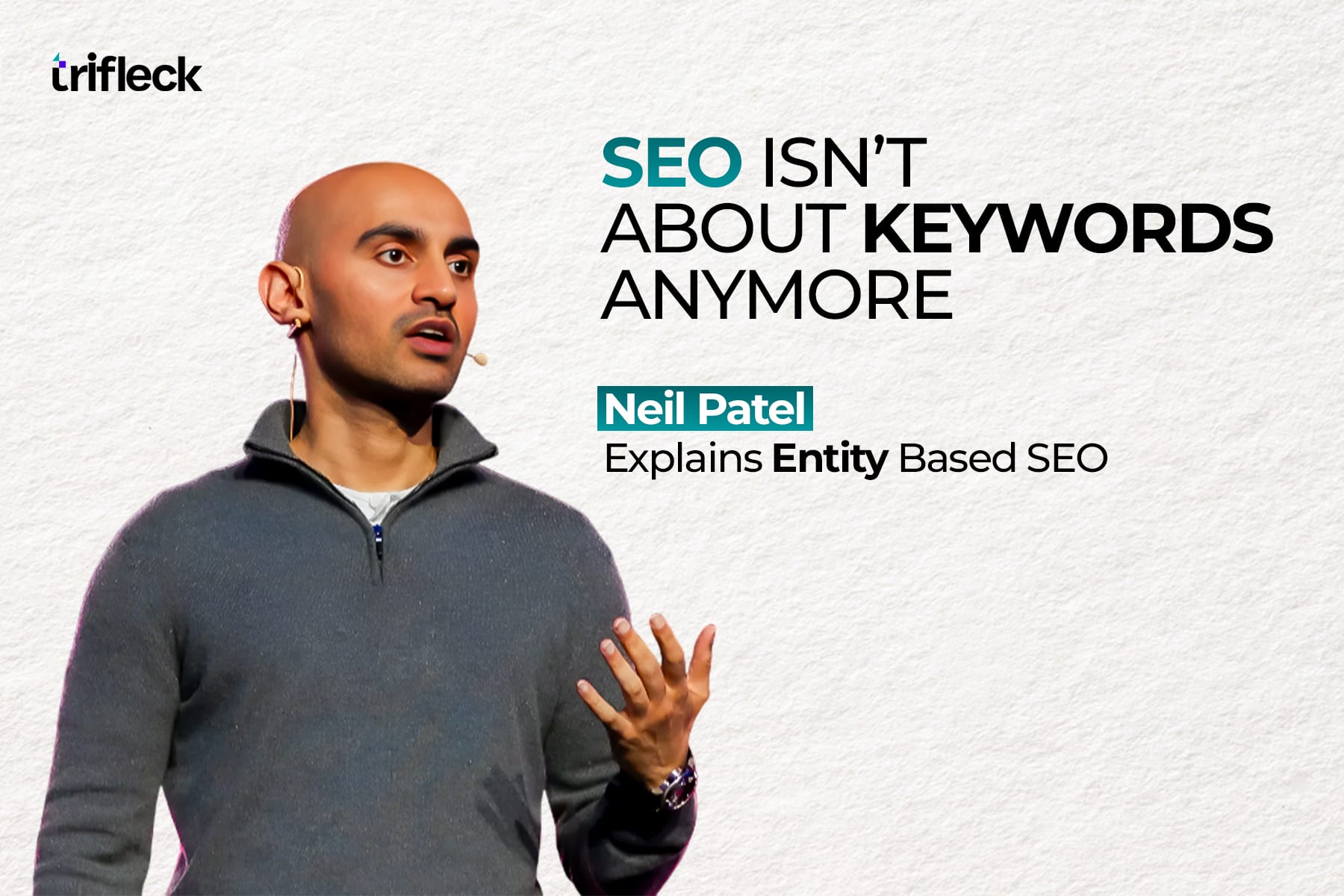
For years, SEO was driven by a simple formula: identify the right keywords, use them frequently, and climb the rankings. But as Neil Patel explains, search has evolved far beyond keyword repetition.
Today, Google doesn’t rank pages based on word count or keyword density. It ranks based on understanding.
The major shift began with Google’s Knowledge Graph. Instead of evaluating pages as collections of words, search engines started identifying entities. An entity can be a person, brand, company, product, location, or even an abstract concept. What makes entities powerful is not just their definition, but their relationships with other entities.
When someone searches for “Apple,” Google must decide whether the user means the fruit or the technology company. It makes that decision by analyzing surrounding context, related topics, structured data, and established connections across the web. That is entity recognition in action.
This is where entity based SEO comes in.
Keywords still matter, but their role has changed. They are no longer targets to hit repeatedly. Instead, they function as intent signals. They reveal what a user is trying to accomplish. Entities, on the other hand, represent the actual “thing” behind the search. When Google clearly understands the primary entity your page represents, it can rank that page across a broad range of related queries, even if the wording differs.
This shift is especially important in the era of AI driven search. Large language models and modern search systems do not read content like humans. They extract facts, attributes, and relationships. They build structured understandings of brands, topics, and concepts. If your website clearly defines who you are, what you offer, and how your topics connect, search engines can interpret and trust your content more easily.
According to Neil, structure plays a critical role here. Topic clusters, internal linking, and consistent terminology help search engines map how your content fits together. Instead of publishing isolated keyword focused articles, brands should build content hubs that revolve around core entities. Supporting pages should answer related questions and link back to the main hub, reinforcing context and authority.
Consistency across platforms is just as important. Your brand name, service descriptions, author bios, and business details should remain aligned across your website, LinkedIn, directories, and other trusted platforms. These consistent signals strengthen entity recognition and reduce ambiguity. Over time, this builds authority not just around keywords, but around your brand as a defined entity.
Neil also highlights a common misconception: structured data and schema markup are helpful, but they are not shortcuts. If your content lacks depth or clarity, technical enhancements alone will not create authority. Entity SEO works when your content genuinely covers a topic comprehensively and connects related ideas in a meaningful way.
The bigger takeaway is clear. SEO is no longer about chasing exact match phrases. It is about building clarity around who you are and what you stand for. Search engines now map concepts, relationships, and authority across the web. Brands that align with this reality are more likely to remain visible as AI continues to reshape discovery.
In short, keywords open the door. Entities define the room.