

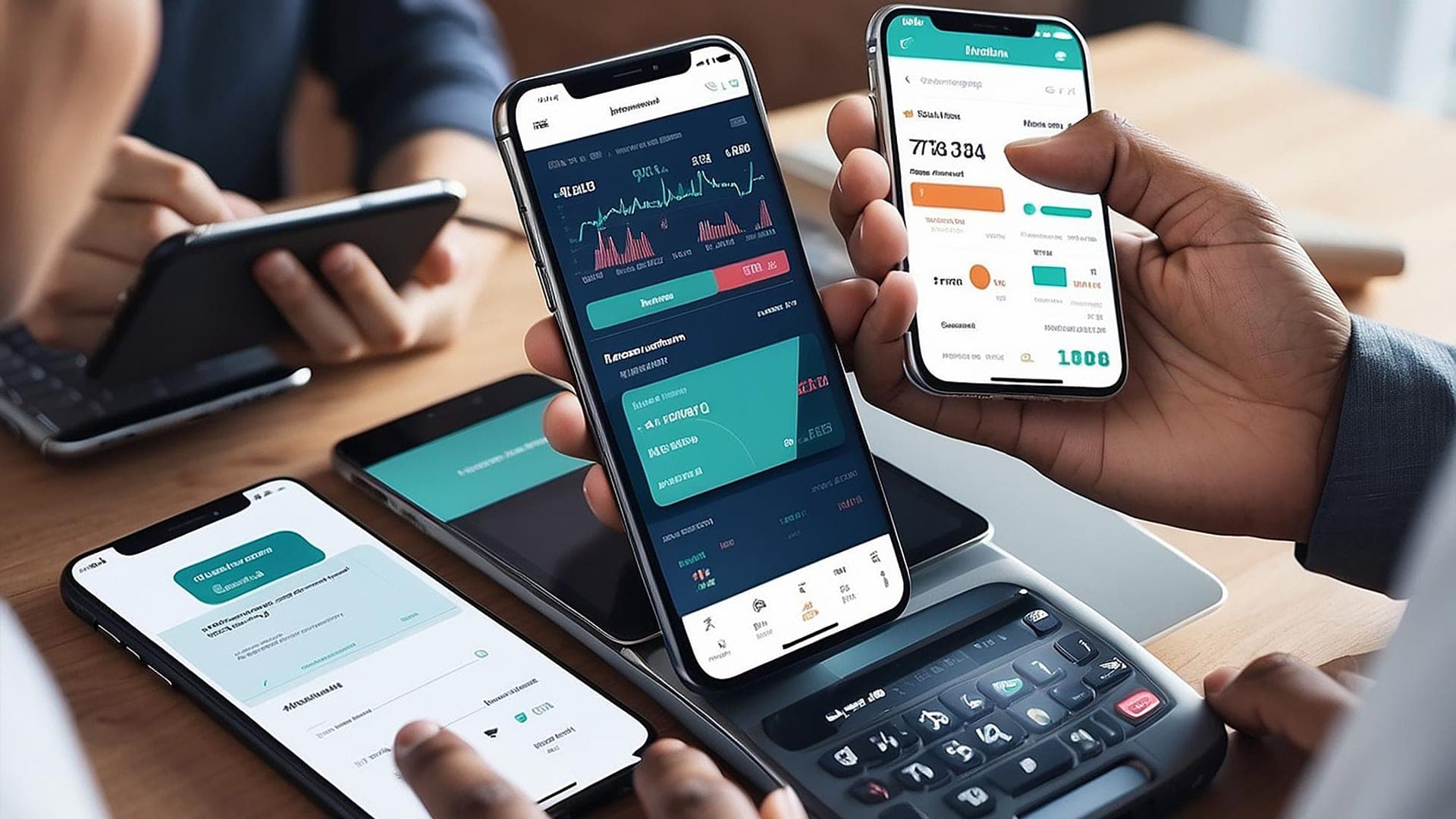
Finance apps are growing fast, and the expectations around them are getting stricter.
For example, Sensor Tower reports that consumer banking apps topped 2 billion downloads in the year ending June 2025, with 5.1% year-over-year growth. At the same time, payment fraud is not slowing down. The European Banking Authority and the European Central Bank reported total payment fraud in the EEA rising to €4.2 billion in 2024, up from €3.5 billion in 2023.
This is why finance products feel different to build. You are not just shipping screens. You are shipping trust.
If you are looking up a finance apps cost calculator, you are already asking the right question: how do we estimate accurately before development starts, so we do not get stuck mid-build with a bigger timeline, a bigger budget, and a bigger risk surface than we planned?
This blog breaks it down with a budgeting approach that works whether you are building a wallet, a lending app, a budgeting tool, a payments product, or a neobank-style experience.
Finance Apps Have Higher Consequences Than Most Apps
A shopping app can survive a small bug. A finance app usually cannot.
When money is involved, tiny failures turn into big problems:
- Users panic, support tickets spike, and reviews get harsh
- Refunds and chargebacks become expensive
- Teams rush fixes, and rushed fixes create more bugs
- Regulators and partners start asking questions
Finance apps also carry extra “invisible” requirements because they connect to sensitive systems. You may need identity checks, audit trails, fraud detection, transaction history that is correct down to the last digit, and admin controls that let your ops team handle exceptions safely.
The fraud trend is one of the clearest signs that finance apps need stronger planning. The EBA and ECB report shows total payment fraud in the EEA reached €4.2 billion in 2024, and the press release highlights that fraudsters are adapting even as strong customer authentication remains effective for certain fraud types.
That is not just “industry news.” It is a budgeting signal. Security, monitoring, and safe workflows cost money. If you do not estimate them up front, you still end up paying for them later, usually under pressure.
Start Estimating With A Calculator, Then Lock The Assumptions
Most teams either estimate too early with too little detail, or estimate too late after time has already been lost. A better approach is a two-step method.
First, run a calculator estimate to get a grounded range. Then, write down your assumptions so the number actually means something.
Trifleck’s app development cost calculator is built for this early-stage planning. Use it right after you agree on what version-one must do. It helps you compare scenarios quickly without turning every meeting into a debate.
Calculate your app finance app development cost here: https://www.trifleck.com/app-cost-calculator
Here is the simplest way to use a finance apps cost calculator without getting trapped by the output:
- Run an MVP estimate (core money flow only)
- Run a realistic version-one estimate (core flow plus security, admin, and monitoring)
- Compare the range difference, then decide what moves to phase-two
The output matters, but the assumptions matter more. Right beside your estimate, write:
- What money features are included in phase-one?
- What compliance and security requirements are included?
- What third-party integrations are included?
- What is included in admin and reporting?
If you do this, the estimate becomes a planning tool instead of a guess.
Why Finance App Costs Jump Faster Than People Expect
Finance apps get expensive for reasons that are easy to miss in early discussions. Most of it comes down to risk, rules, and reliability.
Compliance is not a “later” checklist
If you operate in or serve users in regulated markets, compliance affects the build early.
For example, the EU’s Digital Operational Resilience Act (DORA) entered into application on 17 January 2025. DORA is about operational resilience, including how financial entities handle ICT risks, incidents, and third-party providers. Even if you are not EU-based, this reflects where regulation is heading globally: more focus on resilience, oversight, and incident response.
This changes estimation because it pushes teams to budget for:
- Monitoring and logging
- Incident handling workflows
- Third-party vendor management considerations
- Resilience planning and testing (at least a practical version of it)
Payments standards raise the security bar
If your app touches card data or payment flows, you cannot treat security like a feature you add at the end.
PCI DSS v4 requirements became mandatory on 31 March 2025, and PCI DSS v4.0.1 is a published revision that clarifies intent and updates guidance.
You do not need to quote standards in your UI. You do need to account for the engineering and testing discipline they imply.
Breaches are expensive, and finance data is sensitive
IBM’s Cost of a Data Breach Report 2025 puts the global average breach cost at $4.44 million.
Again, the point is not fear. The point is budgeting honestly for prevention and detection:
- Secure architecture choices
- Access control and secrets handling
- Audit logs
- Penetration testing and remediation cycles
- Monitoring and alerting
If your estimate skips these, it may look attractive, but it will not survive real-world use.
Explaining “Finance Complexity”
Finance app estimation often goes wrong because stakeholders describe a feature in one sentence, but the team has to build a full workflow with edge cases.
| What someone says | What the build really includes | Why cost rises |
| “Add login with OTP” | device checks, session rules, fallback flows, account recovery | more states, more testing |
| “Let users transfer money” | limits, pending states, failures, retries, receipts, history, support tools | risk and edge cases |
| “Add Know Your Customer (KYC)” | document capture, verification states, re-submission, manual review, storage rules | more screens and admin |
| “Add notifications” | security alerts, templates, preferences, delivery tracking, analytics | trust and reliability |
| “Add admin panel” | roles, approvals, logs, exports, dispute handling, user management | operations depend on it |
When you run a finance apps cost calculator, this is the kind of detail you should mentally map into your choices. It keeps the estimate honest.
The Real-World Payments Shift That Affects Finance Apps
Finance apps do not exist in a small corner anymore. Digital payments have become normal behavior.
Worldpay’s Global Payments Report 2025 highlights that digital payments (digital wallets, account-to-account, BNPL, and crypto) grew online from 34% of e-commerce value in 2014 to 66% in 2025.
That trend is good for finance apps, but it also raises user expectations. People want faster transfers, clearer confirmations, safer authentication, and fewer “we will fix it later” moments.
BCG also points to rapid growth in real-time account-to-account payments, noting that real-time A2A volumes were up 40% year-over-year in 2025, and that real-time A2A payments are becoming a large share of retail digital payments in some markets.
This matters for estimation because speed adds complexity. Real-time systems reduce tolerance for errors and delays, so teams need more careful design, better monitoring, and stronger recovery flows.
The Features That Break Finance Budgets When Underestimated
This section is not a list of “everything you can build.” It is a set of common traps that look small until you build them properly.
Know Your Customer (KYC) and onboarding are not “just sign-up”
KYC is a series of steps that must handle real humans in messy situations:
- Blurry photos
- Mismatched names
- Failed liveness checks
- Slow network conditions
- Manual review states
- Re-submission and user frustration
Each part adds screens, backend rules, and admin queues. If you plan KYC as one line item, your budget will drift.
Transaction history must be accurate, not just pretty
A finance app needs a transaction timeline users can trust. That means:
- Clear labels and statuses (pending, completed, reversed)
- Timestamps and references users can share with support
- Receipts and confirmations
- Correct totals and balances across edge cases
This is where good architecture saves you later pain. Bad history logic becomes an endless support issue.
Refunds, reversals, and disputes add “after the action” cost
Many teams estimate the happy path and forget the recovery path.
In finance, recovery paths are not rare. They are part of daily usage:
- Transfers fail
- Cards get declined
- Users send money to the wrong person
- Chargebacks happen
- Disputes require evidence trails
You need workflows, admin tools, and logs. That work needs to be in the estimate from day-one.
Admin and operations tooling is not optional
A finance app without strong admin controls is expensive after launch. Your team becomes the admin panel.
Admin usually needs:
- Role-based access
- Manual review queues (kyc, fraud flags, disputes)
- Audit logs
- Exports for reporting
- User support tooling
This is where a solid mobile app development company earns its value, because it prevents the “we will build admin later” trap that causes slow, risky operations.
Here is a pattern we see often.
A team starts with a clean estimate, then adds “small” finance requirements as they learn more:
- Additional authentication rules
- Better logs and monitoring
- Stronger admin controls
- Compliance-driven changes
- Safer notification flows
The result is scope-creep that feels justified, because it is justified. It is just late.
This is the point where you pause and re-estimate.
If you want a practical scope review that highlights cost drivers and turns your build into phases, contact Trifleck for fintech app development. We can help you lock version-one safely, then plan version-two without guessing.
At that point, run the finance apps cost calculator again, using your updated scope. The estimate usually becomes more stable once the risk layer is properly defined.
Cost Estimation Is Also About Trust Design, Not Only Engineering
Finance apps fail when they feel confusing. Confusion feels unsafe.
Trust design is built from small details:
- Clear language on fees and limits
- Confirmation screens that reduce mistakes
- Error messages that explain what happened
- “pending” states that set expectations
- Receipts users can understand
This is where experts can support. Professional teams can help tighten onboarding copy, microcopy, and key trust screens so users feel in control. That reduces support costs and improves retention, without turning the project into a branding exercise.
How To Estimate A Finance App In A Way You Can Defend
Here is a simple method you can run even if you are not technical.
1) Write the money path
Example: “User signs up, verifies identity, links a bank account, adds funds, sends money, and sees transaction history.”
That is your base.
2) Add the risk layer as its own section
Write it plainly:
- Authentication approach (MFA, device checks)
- Fraud detection and alerts
- Audit logging
- Admin review workflows
- Monitoring and incident handling basics
This is what turns a generic estimate into a finance estimate.
3) Separate phase-one from phase-two
Phase-one should be small but safe.
Phase-two can include deeper features like:
- Multi-currency support
- Advanced reporting
- More rails and partners
- Deeper automation and personalization
When you do this, a finance apps cost calculator becomes genuinely helpful because you are comparing scenarios, not dreaming.
The Budget Lines People Forget, Then Regret Forgetting
Even strong estimates miss these if teams do not force them into the plan.
Post-launch support and maintenance
You will need:
- Bug fixes from real-world behavior
- OS updates and device issues
- Performance tuning under real traffic
- Small improvements that protect retention
Budgeting without post-launch support is like buying a car and forgetting fuel and servicing.
Monitoring and alerting
In finance, you need to know when things break, fast.
Monitoring is not only a tech concern. It affects customer trust because it reduces downtime and shortens incident time.
Security testing and remediation
Pen testing is not a one-time “pass-fail” event. Findings need time to fix, re-test, and validate.
If your estimate has no room for remediation cycles, it is not complete.
What A Good Calculator Output Looks Like
A good output is not a single number. It is a range with included assumptions.
If your finance apps cost calculator output does not clearly cover:
- KYC scope
- Transfers and recovery flows
- Admin tools
- Monitoring and logs
- Security and testing time
Then treat it as a partial estimate, not a final plan.
This is also why teams often move from calculator outputs into phased delivery plans with clear milestones. It is easier to manage cost, easier to approve, and safer to ship.
If you want that approach, Trifleck can support with custom app development services that break the build into realistic phases with clear scope boundaries.
Conclusion
Finance apps are trust products. People use them because they believe the app will be correct, safe, and consistent.
Accurate estimation before development protects that trust. It keeps you from under-scoping the hard parts, and it keeps you from launching with gaps that become expensive later.
Start with the finance apps cost calculator to get a first range. Then improve accuracy by locking assumptions, mapping the risk layer, and separating phase-one from phase-two. Do that, and your budget stops feeling like a guess, and starts feeling like a plan.
If you want help validating scope and building a safe, scalable finance product, contact Trifleck for fintech app development and custom app development services that are designed for real-world finance requirements.