

A business website earns trust before a visitor reads every word on the page. The design, speed, layout, contact details, reviews, security, and content all send signals within seconds. If the site looks outdated, unclear, or unsafe, visitors may leave before they understand what the business offers.
A trustworthy business website does more than look professional. It helps people feel confident that the company is real, capable, responsive, and safe to contact. That trust matters whether the goal is a phone call, quote request, product purchase, appointment booking, or consultation.
Most visitors are cautious when they land on a website for the first time. They want to know who they are dealing with, what the business does, whether other people trust it, and what will happen if they take the next step. This guide breaks down the core elements that make a website look reliable online.
Why Website Trust Matters Before a Customer Contacts You
Trust is one of the first barriers a business website must solve. A visitor may need the service, like the offer, or be interested in the product. Still, they may not take action if the website feels incomplete or risky.
A trustworthy business website reduces that hesitation. It gives visitors enough proof, clarity, and comfort to move forward.
First Impressions Affect Business Credibility
A website’s first impression comes from several things at once. The logo, headline, images, spacing, colors, and page structure all influence how visitors judge the business.
If the website looks clean and current, visitors are more likely to believe the business is organized. If the website looks cluttered, broken, or neglected, visitors may assume the same about the company.
This does not mean every business needs an expensive website. It means the website should look intentional, easy to read, and properly maintained.
Trust Reduces Buyer Hesitation
People hesitate when they do not have enough information. They may wonder if the business is legitimate, if the service is worth the price, or if someone will actually respond after they submit a form.
A trustworthy business website answers those concerns before they become objections. It explains the offer clearly, shows proof, provides contact options, and tells visitors what to expect next.
Online Trust Supports Higher Conversions
Trust directly affects conversions. A visitor is more likely to call, buy, book, or submit a form when the website feels credible.
A site can have strong traffic and still fail if visitors do not feel confident. That is why website trust is not just a branding issue. It affects leads, sales, customer acquisition, and return on marketing spend.
Clean Website Design Makes a Business Feel Professional
Design is not only about how a website looks. It affects how easy the website is to understand. A clean design helps visitors focus on the message instead of struggling with the layout.
Consistent Branding Builds Recognition
Consistent branding makes a business feel more established. The logo, colors, fonts, icons, image style, and writing tone should feel connected from page to page.
Inconsistent branding creates confusion. If every page looks different, visitors may wonder if the business is unorganized or using outdated templates.
Simple Layouts Help Visitors Feel in Control
A strong layout guides the eye. It uses clear sections, short paragraphs, readable headings, and enough spacing between elements.
Visitors should not have to guess where to look next. A trustworthy business website makes the most important information easy to find. The headline should explain the offer, the page should support that message, and the call to action should be clear.
Mobile-Friendly Design Is No Longer Optional
Many visitors will first see the website on a phone. If the text is too small, the menu is difficult to use, or the form is hard to complete, the site loses trust quickly.
Mobile-friendly design means buttons are easy to tap, forms are simple, images load correctly, and the page does not require zooming or sideways scrolling.
Outdated Design Can Create Doubt
An outdated website can make a business look inactive. Old graphics, broken layouts, blurry images, poor spacing, and hard-to-read fonts can all weaken credibility.
Visitors may not say, “This design is old.” They simply feel unsure and leave.
Clear Business Information Helps Visitors Know Who They Are Dealing With
Transparency is a major trust signal. People want to know who is behind the business, what it offers, where it operates, and how to reach someone.
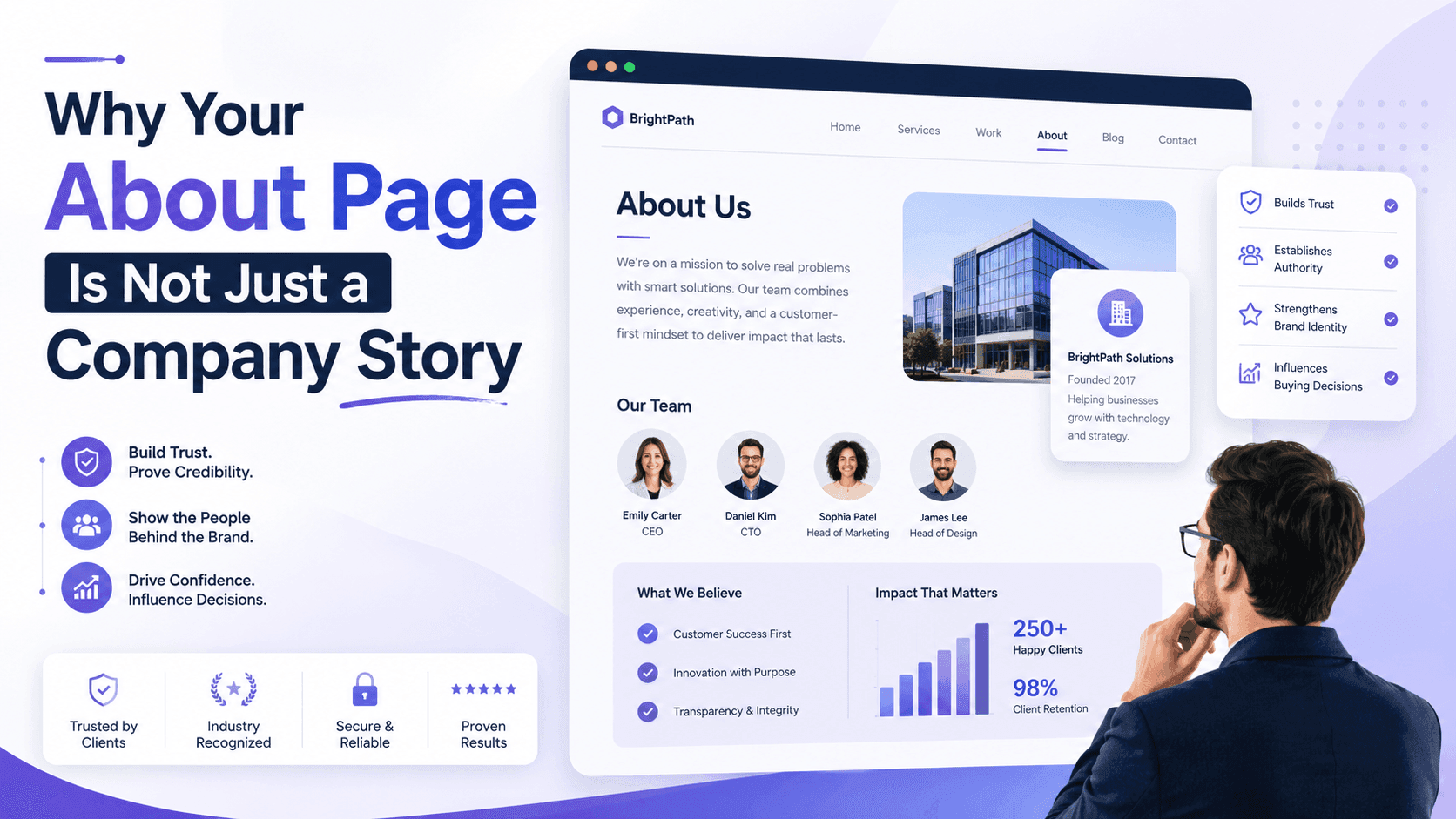
A Clear About Page Gives the Business a Human Side
The About page should do more than share a generic company statement. It should explain who the business serves, how it started, what experience it has, and what customers can expect.
For service businesses, this page can include team details, company values, certifications, and a simple explanation of the business approach.
Contact Details Should Be Easy to Find
A visitor should not have to search for contact information. Phone numbers, email addresses, contact forms, service areas, business hours, and location details should be easy to access.
If the business uses a contact form, the form should be simple. It should also explain what happens after submission, such as “We respond within one business day.”
Service Pages Should Explain Exactly What You Offer
Clear service pages help visitors decide if the business fits their needs. Each page should explain the service, who it is for, what is included, how the process works, and what result the customer can expect.
A trustworthy business website avoids vague service descriptions. It gives visitors enough detail to understand the value before they contact the company.
Policies and Legal Pages Support Transparency
Privacy policies, terms of service, refund policies, shipping policies, and cookie notices help users feel safer. These pages are especially important for websites that collect personal information, process payments, or sell products online.
Website Security Signals Make Users Feel Safe
Website trust also depends on technical safety. Visitors need to feel that their information is protected when they submit a form, create an account, or make a purchase.
SSL Certificates Show Basic Site Protection
An SSL certificate allows a website to use HTTPS. This is one of the most basic security signals visitors expect.
If a browser shows a “Not Secure” warning, many users will leave immediately. A trustworthy business website should never make visitors question whether the site is safe to use.
Secure Payment Pages Protect Customer Confidence
For eCommerce businesses, secure checkout is essential. Visitors need to see trusted payment options, clear pricing, order confirmation, refund information, and support details.
A confusing checkout page creates doubt at the worst possible moment, right before the purchase.
Form Privacy Should Be Clearly Explained
Contact forms, booking forms, quote forms, and newsletter forms all collect user information. Visitors should know why the information is needed and how it will be used.
A short note near the form can help. For example: “We use your details only to respond to your request.”
Social Proof Helps Visitors Believe Your Claims
Every business can say it is reliable. Social proof helps prove it.
When visitors see that other people have used and trusted the business, they feel less risk in taking the next step.
Customer Reviews Give Visitors Outside Validation
Reviews are powerful because they come from customers, not the business itself. They help visitors understand the real experience of working with the company.
A trustworthy business website should display strong reviews in visible areas, especially on the homepage, service pages, and landing pages.
Testimonials Should Be Specific
A weak testimonial says, “Great service.” A strong testimonial explains the problem, the service used, and the result.
Specific testimonials feel more believable because they show context. They help visitors imagine what their own experience could look like.
Case Studies Show Real Business Results
Case studies work especially well for service-based businesses, agencies, consultants, contractors, and B2B companies. They show the process, the challenge, and the outcome.
A good case study does not need to be long. It should explain what the client needed, what the business did, and what changed after the work was completed.
Client Logos and Certifications Add Authority
Client logos, partner badges, awards, licenses, and certifications can support credibility. They should be real, relevant, and easy to verify.
These trust signals are most useful when placed near decision points, such as above a form, near a CTA, or on a service page.
Helpful Content Makes the Business Look Knowledgeable
Content quality is one of the clearest signs of expertise. A business that explains things well appears more confident and useful.
Blog Content Can Address Common Customer Concerns
Blog posts, guides, FAQs, checklists, and comparison pages help visitors make better decisions. They also show that the business understands real customer questions.
For example, a web design company could publish content about website costs, redesign timelines, SEO basics, page speed, and conversion issues.
Clear Explanations Beat Vague Marketing Language
Visitors trust direct answers more than exaggerated claims. Phrases like “best solutions” or “world-class service” mean little without proof.
A trustworthy business website uses clear language. It explains what the business does, why it matters, and how the customer benefits.
Updated Content Shows the Business Is Active
Outdated content can create concern. Old blog dates, expired offers, inactive pages, and outdated service details can make visitors question whether the business is still active.
Regular updates show that the company is paying attention.
FAQs Can Remove Last-Minute Doubts
FAQs help answer questions that may stop a visitor from converting. These can include pricing, timelines, process, guarantees, support, service limits, and next steps.
Strong FAQs are specific. They do not repeat generic answers. They address real concerns that customers bring up before making a decision.
Easy Navigation Helps Visitors Find Answers Faster
A trustworthy website should be easy to move through. Visitors should quickly understand where they are, what page they need, and what action to take next.
Menu Labels Should Be Simple
Simple menu labels work best. Common examples include Services, About, Pricing, Portfolio, Blog, FAQs, and Contact.
Creative labels may look interesting, but they can confuse users. Clarity matters more than clever wording.
Important Pages Should Be One or Two Clicks Away
Visitors should not have to dig through the site to find basic information. The homepage should lead naturally to service pages, proof, pricing details when available, and contact options.
A trustworthy business website respects the visitor’s time by making important pages easy to reach.
Internal Links Should Guide the Reader Naturally
Internal links help visitors move from one useful page to another. A service page can link to a related case study. A blog post can link to a relevant service. A pricing page can link to FAQs.
This keeps the visitor engaged and helps them learn more without feeling lost.
Clear Calls to Action Make the Website Feel More Reliable
A website should not leave visitors wondering what to do next. Clear calls to action guide people toward the right step.
Every Main Page Should Have a Clear Next Step
Each important page should include a visible CTA. Examples include “Request a Quote,” “Book a Consultation,” “View Services,” “Start a Project,” or “Contact Us.”
The CTA should match the page. A service page may invite visitors to request pricing. A blog post may guide them to a related service.
Forms Should Be Short and Easy to Complete
Long forms create friction. Ask only for the details needed at that stage.
A first-contact form may only need a name, email, phone number, and short message. More detailed questions can come later.
Confirmation Messages Should Set Expectations
After someone submits a form, the website should confirm the action and explain what happens next.
A simple message like “Thank you. Our team will contact you within one business day” creates confidence and reduces uncertainty.
Common Website Mistakes That Damage Trust
Some website problems quietly push visitors away. They may seem small, but they affect how people judge the business.
Too Many Pop-Ups Can Annoy Visitors
Pop-ups can work when used carefully. However, aggressive pop-ups can feel disruptive, especially when they appear before the visitor understands the business.
Unclear Pricing Can Create Friction
Not every business needs fixed pricing on the website. However, visitors need some context. This may include starting prices, package ranges, quote requirements, or a clear explanation of how pricing is determined.
Overpromising Makes the Website Feel Less Believable
Big claims need proof. Statements like “guaranteed results,” “number one,” or “best in the industry” can create doubt if they are not supported by reviews, data, awards, or case studies.
Broken Links Make a Website Feel Neglected
Broken links, missing images, dead buttons, and error pages damage trust quickly. They suggest that the business is not maintaining its online presence.
If you already have a website but it’s not performing well because of any of these mistakes, Trifleck helps you overcome them and drive more traffic.
Simple Trust Checklist for a Business Website
Before judging whether your website is ready to support leads or sales, review the basics.
Design and Branding Checklist
Check whether your website has consistent branding, readable fonts, clear spacing, professional images, and a mobile-friendly layout.
Content and Messaging Checklist
Review whether your services are clear, your About page is useful, your content is updated, and your FAQs answer real customer questions.
Proof and Credibility Checklist
Make sure the site includes reviews, testimonials, case studies, certifications, portfolio examples, or client logos where relevant.
Security and Technical Checklist
Check for HTTPS, working forms, fast loading speed, active buttons, no broken links, and accessible page structure.
Conversion Checklist
Review whether each page has a clear CTA, simple forms, visible contact information, and confirmation messages that set expectations.
Conclusion
A trustworthy website does not rely on one feature. It is built through many small signals that work together.
Clean design creates a strong first impression. Clear business information removes uncertainty. Security features help users feel safe. Reviews, testimonials, and case studies provide proof. Helpful content shows knowledge. Easy navigation and strong CTAs guide visitors toward action.
A trustworthy business website makes people feel that the business is real, capable, and easy to work with. When visitors can understand the offer, verify credibility, feel safe sharing information, and know what to do next, they are much more likely to become customers.
Frequently Asked Questions
How can a small business website look trustworthy without showing a large team?
A small business website can look trustworthy by showing a real founder photo, clear service details, direct contact information, customer reviews, project examples, and a simple explanation of how the business works. Visitors do not need to see a large team. They need proof that the business is real, responsive, and capable.
Should a trustworthy business website show pricing?
A trustworthy business website should give some pricing context, even if it does not show exact prices. This can include starting rates, package ranges, project minimums, or a note explaining what affects the final quote. Complete pricing silence can make visitors hesitate.
What type of photos make a business website feel more credible?
Real photos usually build more trust than generic stock images. Team photos, office photos, product photos, work-in-progress images, completed project photos, and customer-facing service photos make the business feel more authentic.
How often should a business website be updated to maintain trust?
A business website should be reviewed at least every three to six months. Service details, pricing notes, team information, contact details, testimonials, portfolio examples, and outdated blog content should be checked during each review.
Can too many trust badges make a website look suspicious?
Yes. Too many badges can make a website look cluttered or forced. Use only relevant trust badges, such as SSL security, payment protection, verified review platforms, industry certifications, partner logos, or professional memberships.
What should a service business add to its homepage to build trust faster?
A service business homepage should include a clear headline, short service summary, visible contact option, customer reviews, service area, proof of experience, process overview, and a direct call to action. These elements help visitors understand the business quickly.
Should every business website include customer reviews?
Yes, if reviews are available. Customer reviews help first-time visitors feel safer because they show outside validation. Reviews work best when placed on the homepage, service pages, landing pages, and near contact forms.
How can a new business build website trust without many reviews?
A new business can use founder experience, work samples, certifications, process explanations, guarantees, detailed FAQs, transparent policies, and clear contact information. These signals help replace the trust gap while the business collects reviews.