

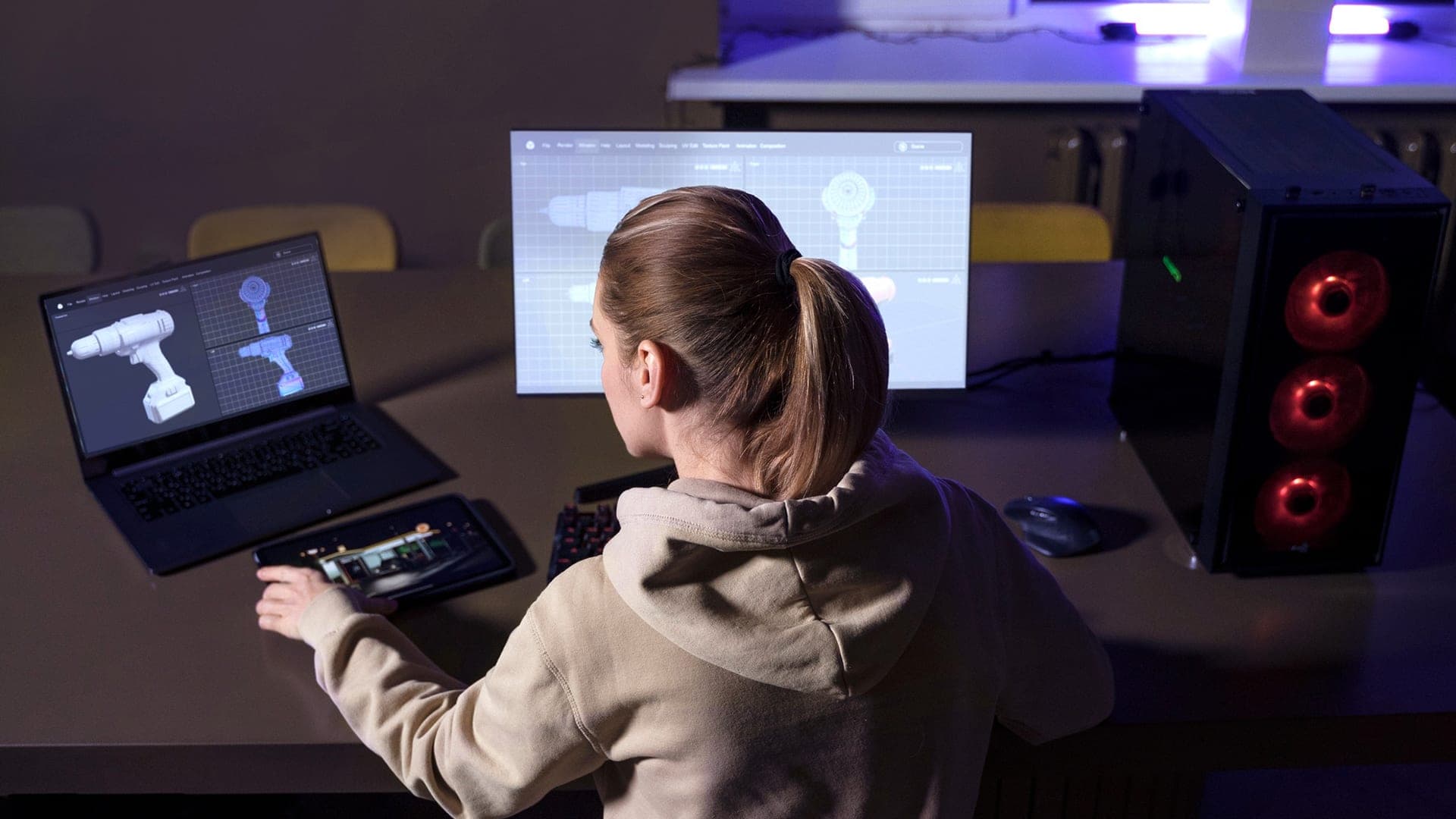
If you have ever played a game that felt visually impressive but somehow disconnected, you already understand something important.
Art alone is not enough.
In games, visuals are not decoration. They are systems. They communicate mechanics, guide attention, signal emotion, and shape trust. When those systems break, the player feels it immediately, even if they cannot explain why.
Game art design sits inside that gap.
Not as random illustrations.
Not as isolated character renders.
Not as “make it look cool” work delivered at the end.
Game art design translates gameplay mechanics, narrative intent, technical constraints, and player psychology into a visual system that works in motion.
That sounds broad because it is. But the work itself is specific.
What Is Game Art Design and Why Is It Often Misunderstood?
Game art design is the structured creation of visual assets for interactive systems.
It includes how characters look, how environments feel, how interfaces communicate, how animations respond, and how everything fits inside a game engine like Unity or Unreal Engine.
Many people outside production treat game art design as a visual phase.
That is like treating architecture as furniture selection.
Game art design is closer to production design combined with system thinking. It connects directly to:
- Game mechanics
- Genre expectations
- Platform constraints (mobile, PC, console)
- Engine performance
- Monetization models
- Player retention systems
If your characters look great but blend into the background, that is a game art design problem.
If your UI is pretty but unreadable mid-battle, that is a game art design problem.
If your environment art causes frame drops on mobile devices, that is a game art design problem.
The visuals are inseparable from performance and usability.
What Makes Game Art Design Strategic Instead of Just Visual?
Strategic game art design solves constraints without making them visible.
A functional art team can produce assets that meet a brief.
A strong game art design function builds a cohesive visual language that survives scale.
Strategic work answers questions like:
- What emotional tone defines this game?
- How realistic or stylized should assets be?
- How complex can models be before performance suffers?
- How does visual clarity support gameplay readability?
- How will new content be added post-launch?
Creativity in game art design is not about visual noise. It is about making systems feel intuitive.
When done well, players do not praise the art directly. They stay longer. They understand faster. They trust the experience.
What Happens First in a Game Art Design Process?
Diagnosis. Not sketching.
A serious game art design process starts by understanding the production ecosystem. A request like “We need better graphics” is usually a symptom.
Underlying issues often look like this:
- The art style does not match the target audience
- Assets are inconsistent across screens
- The UI feels disconnected from gameplay
- The mobile version performs poorly
- The visual hierarchy hides important mechanics
- Live updates break style consistency
Before any concept art begins, game art design must clarify:
- Genre entity (RPG, FPS, Hypercasual, Strategy, Simulation)
- Platform entity (iOS, Android, Steam, Console)
- Player persona entity
- Engine entity (Unity or Unreal)
- Production timeline entity
Skipping this stage is how studios waste months redesigning assets later.
How Does Game Art Design Research Player Expectations?
Research in game art design is not academic. It is risk reduction.
Different genres carry different visual expectations.
A horror game requires tension through lighting and texture.
A hypercasual mobile game requires instant clarity and bright contrast.
A competitive shooter requires readability at high speed.
A professional game art design process may analyze:
- Competing titles in the same genre
- Player reviews referencing visuals
- Performance benchmarks for target devices
- Retention metrics tied to visual complexity
- Monetization patterns tied to skins and cosmetics
Here is the key difference between amateur and experienced teams:
They do not ask players what art style they want.
They study what visual decisions improve clarity, immersion, and retention.
That is how game art design becomes a production asset instead of a subjective debate.
What Deliverables Come Out of Game Art Design?
This is where expectations matter.
Game art design is not one file. It is a layered system of outputs.
Concept Art
Concept art defines direction before production scale begins.
It clarifies:
- Character identity
- Environment mood
- Color palette logic
- Proportion rules
- Visual tone
Concept art protects consistency. It prevents mid-production drift.
3D Modeling and Asset Creation
3D models translate visual direction into production-ready files.
This includes:
- Polygon count management
- Texture mapping
- Rigging compatibility
- Animation readiness
- Engine import standards (FBX, texture compression)
Game art design at this stage must balance aesthetics with performance.
UI and HUD Systems
UI in game art design is not a graphic layer. It is gameplay communication.
It defines:
- Health bars
- Inventory systems
- Skill trees
- Navigation menus
- Feedback indicators
If the UI breaks clarity, mechanics feel broken too.
Environment Design
Environment art defines world-building and navigation logic.
It guides players subtly through:
- Lighting contrast
- Path framing
- Spatial hierarchy
- Depth cues
Environment-focused game art design influences player movement without forcing it.
How Does Game Art Design Work With Game Engines?
Game art design does not live in Photoshop. It lives inside engines.
Every asset must integrate with:
- Unity rendering pipeline
- Unreal Engine material systems
- Shader configurations
- Lighting systems
- Physics interactions
If the art team ignores engine constraints, you get:
- Frame rate drops
- Memory spikes
- Import conflicts
- Rework cycles
Professional game art design includes technical art oversight. Technical artists act as the bridge between visual ambition and engine reality.
Without that bridge, production slows dramatically.
How Does Game Art Design Support Monetization?
In modern games, monetization often connects directly to visuals.
Skins, cosmetics, seasonal assets, and premium themes all rely on scalable game art design systems.
If your style is too complex, creating new cosmetic variations becomes expensive.
If your character base model is not modular, seasonal updates require rebuilding assets.
If your color system lacks structure, limited-edition items feel random instead of premium.
Strategic game art design anticipates:
- Live-ops content
- Battle passes
- Seasonal themes
- DLC expansions
It builds modularity into the asset pipeline from the start.
What Role Does Consistency Play in Game Art Design?
Consistency is not about repetition. It is about predictability.
Players learn visual rules quickly. When those rules break, confusion appears.
Game art design enforces consistency through:
- Style guides
- Asset libraries
- Texture standards
- Typography systems
- Animation behavior rules
Without these systems, teams create visual fragments instead of cohesive worlds.
As studios scale, consistent game art design reduces onboarding time for new artists and external partners.
How Does Game Art Design Differ Across Product Types?
Different game categories demand different design priorities.
Mobile Games
Mobile game art design prioritizes:
- Readability on small screens
- Lightweight assets
- High contrast UI
- Fast loading performance
Clarity often matters more than realism.
Console and PC Games
Here, environment depth, lighting realism, and cinematic detail gain importance.
But performance constraints still exist, especially in multiplayer contexts.
Indie Games
Indie-focused game art design often leans on strong stylistic identity over high asset volume.
A clear visual theme can compensate for smaller production budgets.
Live-Service Games
Live-service models require scalable art pipelines.
Game art design must support ongoing content without breaking aesthetic coherence.
Category expectations shape visual logic. Ignoring those expectations creates friction. On the flipside, hiring a reliable name for game art design, like Trifleck, can help you see your vision come to life.
How Do You Know If Your Studio Needs Stronger Game Art Design?
Ask what problem you are actually facing.
If your assets look good individually but inconsistent together, you need structure.
If performance suffers after visual upgrades, you need technical alignment.
If players struggle to understand mechanics visually, you need clarity.
If post-launch content feels disconnected, you need system thinking.
Game art design becomes essential when:
- Production is scaling
- Monetization relies on cosmetics
- Multiple teams are producing assets
- Outsourcing partners are involved
- Engine limitations are becoming visible
The difference is not artistic talent. It is system ownership.
What Questions Should You Ask When Hiring for Game Art Design?
If you are outsourcing or hiring internally, avoid portfolio-only decisions.
Ask:
- How do you align art style with gameplay mechanics?
- How do you manage performance budgets for mobile?
- What engine pipelines have you worked with?
- How do you ensure consistency across updates?
- How do you structure asset modularity for live content?
Strong answers reveal process. Weak answers focus only on visuals.
Game art design is a production discipline, not a gallery showcase.
The Bottom Line
Game art design is not about making games look better.
It is about making them function visually.
It treats characters, environments, UI systems, animations, and technical constraints as interconnected entities. It connects creative ambition with engine limitations. It supports monetization without breaking immersion. It builds visual rules that survive scaling.
When game art design is done properly, players do not notice the structure behind it.
They simply stay longer.
They understand faster.
They return more often.
That is the real measure of visual success in interactive systems.
Game art design is not decoration.
It is gameplay clarity, production efficiency, and long-term scalability translated into visual form.
Frequently Asked Questions
What is the ideal polygon budget for mobile game art design?
There is no universal number, but for mobile games targeting mid-range Android devices, individual character models often range between 5,000 to 25,000 polygons depending on style and camera distance. Environment assets are typically optimized further. The real benchmark is maintaining stable frame rates (30–60 FPS) on target devices, not hitting an arbitrary polygon number.
What is the difference between a concept artist and a game art designer?
A concept artist explores visual direction and produces reference imagery for characters, environments, and mood. A game art designer works at a systems level, ensuring that concept art translates into engine-ready assets that function within gameplay, UI, performance constraints, and monetization structures. Concept art defines vision; game art design ensures execution.
Can game art design impact monetization performance in free-to-play games?
Yes, directly. Cosmetic skins, character variants, seasonal themes, and UI polish affect perceived value. If base characters are not modular, or if color systems lack structure, creating premium variations becomes costly and visually inconsistent. Strong game art design supports scalable cosmetic production and increases the lifetime value (LTV) of players.
What is the role of lighting in game art design?
Lighting defines mood, directs player attention, and improves gameplay readability. In competitive or fast-paced games, lighting contrast can subtly guide players toward objectives. In narrative-driven games, lighting enhances emotional tone. Poor lighting can make even well-modeled assets feel flat or confusing.
How does game art design change for live-service games?
Live-service games require scalable pipelines. Assets must be modular, style systems must be documented, and performance budgets must leave room for seasonal updates. Game art design in this model focuses on long-term sustainability, ensuring that new skins, maps, or events integrate seamlessly without breaking visual coherence.