
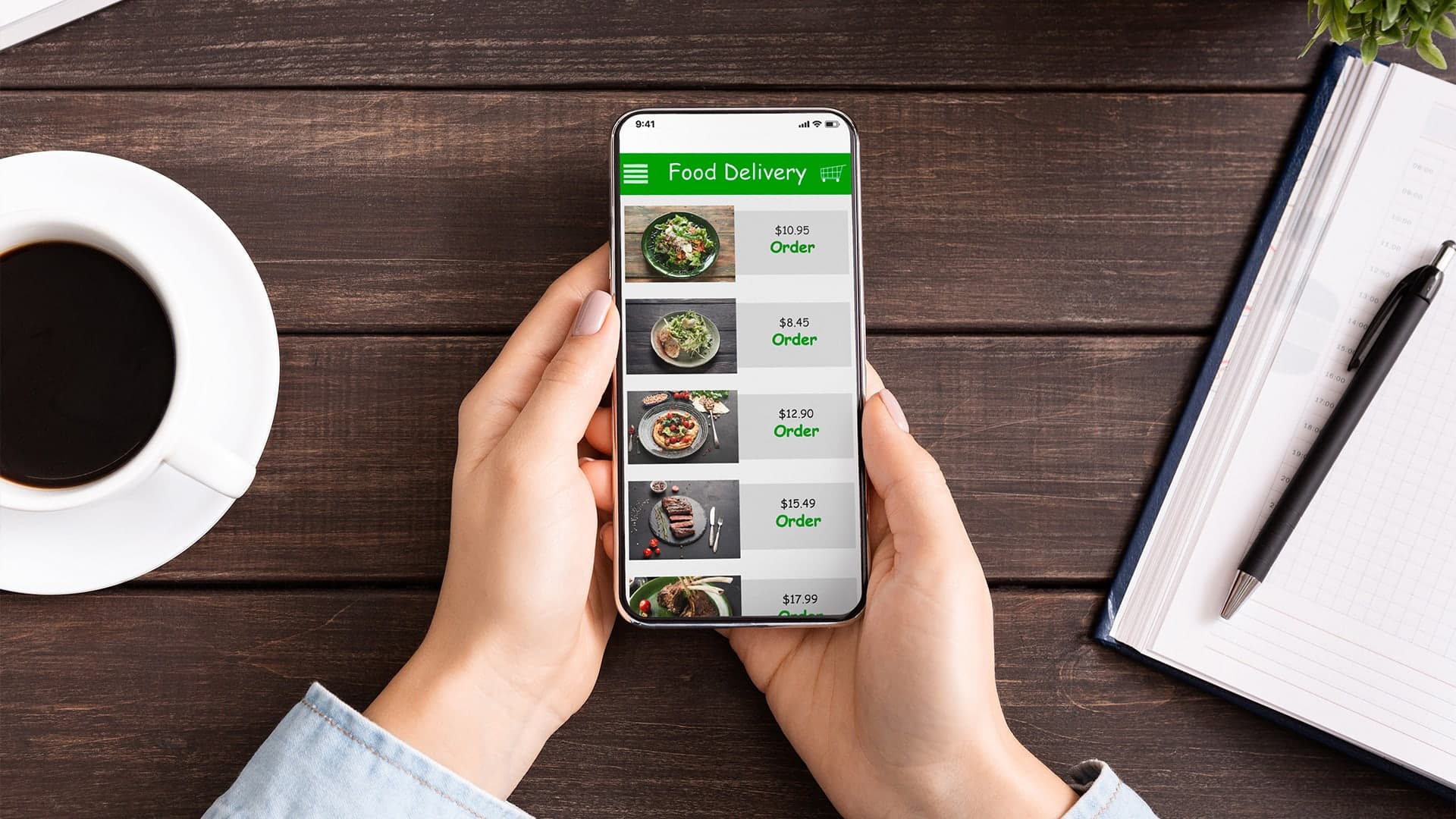
Food delivery is not a trend anymore, it is a routine. Some forecasts put the global online food delivery market at roughly USD 284.73 billion by 2026, which explains why competition is intense and speed matters. But when founders ask, “How much will our app cost?” they still get vague answers. That is usually not because vendors are hiding something, it is because food delivery apps have more moving parts than people expect: customer ordering, restaurant operations, drivers, real-time updates, and admin tools.
In this guide, we break down what actually drives costs and how a food delivery app development costs calculator helps you estimate a realistic range before you commit.
What “Food Delivery App Cost” Really Includes
When people hear “app cost,” they often picture the customer screens only. But a working food delivery product is usually four connected products:
- Customer app (ordering, payments, tracking)
- Restaurant app or panel (menu, order management)
- Driver app (delivery tasks, navigation, proof of delivery)
- Admin dashboard (support, refunds, payouts, moderation, reporting)
If any one of these is missing or weak, the whole experience suffers. That is why two apps that look similar in screenshots can have very different quotes.
A simple truth before we talk numbers
The biggest cost driver is not “how many screens.” It is complexity across roles, real-time actions, and integrations.
The Cost Levers That Move Your Budget The Most
Some decisions barely change the price. Others change everything. These are the levers that usually matter most.
Platform scope
- One platform (iOS or Android) costs less than both
- Building mobile plus web panels increases scope
- Cross-platform can be efficient, but you still pay for testing, performance tuning, and platform-specific details
Real-time features
Food delivery is full of “right now” moments:
- Order accepted
- Food ready
- Driver assigned
- Driver near you
- Delivery completed
Real-time tracking, live status updates, and push notifications add work across backend, apps, and QA.
Dispatch and delivery logic
If your app includes delivery (not only “pickup”), the system needs logic for:
- Assigning drivers
- Handling rejects and timeouts
- Surge situations (Friday nights, rain, events)
- Route and ETA calculations
- Customer support workflows
This is a major cost zone because it is both technical and operational.
Payments and payouts
Taking customer payments is one layer. Paying restaurants and drivers is another.
Your cost changes based on:
- Stripe, Adyen, Braintree, local gateways
- Split payments
- Refund rules
- Wallets, promos, coupons, referral credits
- Payout schedules and reconciliation
Data and integrations
If you integrate with POS systems, third-party logistics, or loyalty platforms, costs rise. Integrations often look “simple” until you meet API limits, inconsistent data, or edge cases.
A Fast Way To Estimate Your Budget Before You Talk To Anyone
This is where a food delivery app development costs calculator becomes useful.
Trifleck’s app cost calculator is designed for early planning. You select what you are building (MVP or full product), the roles you need, and the key features that affect timeline and budget. Instead of a vague “it depends,” you get a realistic range based on scope.
Use it like this:
- Run a lean MVP estimate
- Run a “competitive MVP” estimate (one differentiator included)
- Run a “full marketplace” estimate (customer + restaurant + driver + admin, with strong ops tools)
Calculate your food delivery app development cost here: https://www.trifleck.com/app-cost-calculator
You will immediately see which features push the number up, and which choices keep you in budget. That is the real value of a food delivery app development costs calculator: it turns tradeoffs into visible numbers.
Typical Cost Bands
Costs vary by country, team setup, and feature depth. But most food delivery builds fall into one of these “bands.”
| Build type | What it usually includes | Best for |
| Lean MVP | Customer ordering, basic restaurant panel, basic admin, simple delivery flow or pickup only | Testing demand fast |
| Competitive MVP | Better search, offers, push notifications, driver app, basic dispatch, solid admin tools | Launch with traction goals |
| Full platform | Advanced dispatch, live tracking, multi-restaurant, analytics, loyalty, robust payouts, strong support tools | Competing at scale |
A common mistake is trying to launch a “full platform” on an MVP budget. That mismatch causes delays, messy releases, and expensive rebuilds.
If you want a quick sanity check, run your scope through a food delivery app development costs calculator and compare the bands. If your feature list looks like a full platform, your estimate will reflect it.
Feature-By-Feature Breakdown That Actually Helps
Instead of dumping a long list, here is a practical breakdown of what features usually cost “in effort.” Think of it as what creates time, risk, and testing load.
Core ordering features
These are your baseline.
- Sign up and login (phone, email, social)
- Restaurant discovery and search
- Menu browsing (variants, add-ons, combos)
- Cart and checkout
- Order status updates
- Ratings and reviews
These features are not “cheap,” but they are predictable.
Delivery engine features
This is where budgets start moving.
- Driver onboarding and verification
- Assigning and reassigning deliveries
- Driver navigation and route flow
- Proof of delivery (photo, OTP, signature)
- ETA logic and tracking
Even a clean first version of delivery logic needs careful handling of edge cases. A driver cancels. A restaurant delays. A customer changes address. These happen daily.
Growth features that add hidden work
- Promo codes and coupons (with rules)
- Referrals
- Wallet credits
- Membership or subscription perks
- Scheduled orders
These seem small but often require solid admin controls, reporting, and guardrails to prevent abuse.
Support and operations features
This is the part many founders forget to budget for.
- Refund workflows
- Dispute resolution
- Manual order adjustments
- Customer support chat or ticketing
- Restaurant issue reporting
- Driver issue reporting
When you skip ops tools, your team ends up doing everything manually. That is costly in a different way.
This is the moment you should be brutally honest about your first release.
If you want a clear estimate, timeline, and build plan that fits your goals, contact Trifleck for app development. A short discovery phase can confirm your MVP scope, identify the costly parts early, and prevent you from paying twice.
Three Real-World Build Paths (And What They Usually Cost You In Effort)
These are common approaches that teams take. You can pick the one that matches your risk level.
Path 1: Pickup-first MVP
You build:
- Customer ordering
- Restaurant order management
- Payments
- Admin panel
You skip:
- Driver app
- Real-time tracking
- Dispatch logic
This can be the fastest way to validate demand because delivery operations are the hardest part.
Path 2: Hybrid delivery with a simple driver flow
You build:
- Everything in pickup-first
- Driver app with basic delivery tasks
- Basic assignment logic (manual or semi-automatic)
- Simple tracking
This is a good “middle” option when your business needs delivery but you are not ready for advanced dispatch.
Path 3: Marketplace-style platform
You build:
- Customer + restaurant + driver + admin
- Advanced dispatch
- Strong support and refund workflows
- Offers, loyalty, analytics
This is the most expensive path, but it is also the most competitive if you are entering a crowded city and need a real advantage.
If you are uncertain which path fits, run all three scenarios through a food delivery app development costs calculator. It is a quick way to see how much “delivery complexity” is costing you.
The Design Factor People Underestimate
In food delivery, design is not just aesthetics. It reduces mistakes.
Simple examples:
- Clear modifiers prevent wrong orders
- Good cart UI reduces checkout drop-offs
- Visible delivery updates reduce angry support tickets
This is why UI UX design services should not be treated as a final polish. If your menus are complex, design is part of accuracy.
Also, launch visuals matter. App store screenshots, landing pages, promo creatives, and brand assets influence whether users trust you. If you need help with those brand and launch pieces, a professional team can support the design and marketing side while your build team focuses on delivery.
Team And Pricing Model Choices That Change Your Total Cost
In-house vs agency vs hybrid
- In-house can be great long-term but costs more to assemble and manage early
- Agency teams move faster when you need speed and structure
- Hybrid (agency build + small internal product team) is common for startups
Fixed scope vs agile
If your requirements are still moving, fixed-scope contracts can become painful. An agile approach can reduce risk because you can ship in stages, learn, and adjust.
This is where MVP app development is a real strategy, not a buzzword. You are building a learning machine, not just shipping screens.
A simple “cost checklist” you can use today
If you want to pressure-test your scope, answer these questions:
- Do you need a driver app in version 1?
- Will you do live tracking or only status updates?
- Are you handling payouts to restaurants and drivers?
- Will you support scheduled orders?
- Will restaurants manage menus themselves?
- Do you need multi-language or multi-currency?
- Are you integrating with POS tools or doing manual menu setup?
Each “yes” adds work. Not always a lot, but it adds up.
If you want to convert those answers into a range fast, use a food delivery app development costs calculator and keep your first version honest.
Cost Pitfalls That Surprise Founders
“We will add admin later”
Admin is not optional in a live delivery business. Without it, you cannot manage promos, refunds, restaurants, and drivers cleanly.
Underbuilding the menu system
Food menus can be messy:
- Sizes
- Add-ons
- Meal deals
- Custom notes
- Out-of-stock handling
A weak menu system becomes an expensive rewrite.
Skipping QA time
Food delivery has too many combinations to rush testing:
- Different devices
- Different payment outcomes
- Different delivery states
- Restaurant delays
- Driver cancellations
QA is where you prevent one-star reviews.
How Trifleck Approaches Food Delivery Builds
Trifleck typically works end-to-end, from scoping and product planning to design, development, testing, and launch support. If you are comparing vendors, ask what is included in the build, especially around admin, testing, and post-launch iterations.
This matters because two quotes can look similar, but one includes the things that make the launch stable, and the other quietly leaves them out.
If you are still early, start with the calculator first. Run a lean scenario and a competitive scenario. Then you can have better calls with vendors because you already understand your tradeoffs.
Use the food delivery app development costs calculator again after you refine your MVP. The second run is usually more accurate than the first, because you have trimmed wish-list features.
Final Takeaway
Food delivery app budgets become realistic when you stop thinking in “screens” and start thinking in systems: roles, real-time actions, payments, dispatch, and support operations.
If you want a practical, early cost range, start by mapping your build path and running it through a food delivery app development costs calculator. Then refine your MVP, run it again, and use that range to plan your timeline and investment.
And when you want to turn the estimate into an actual build plan, Trifleck can help you scope the right first version and deliver it with the level of stability food delivery users expect.