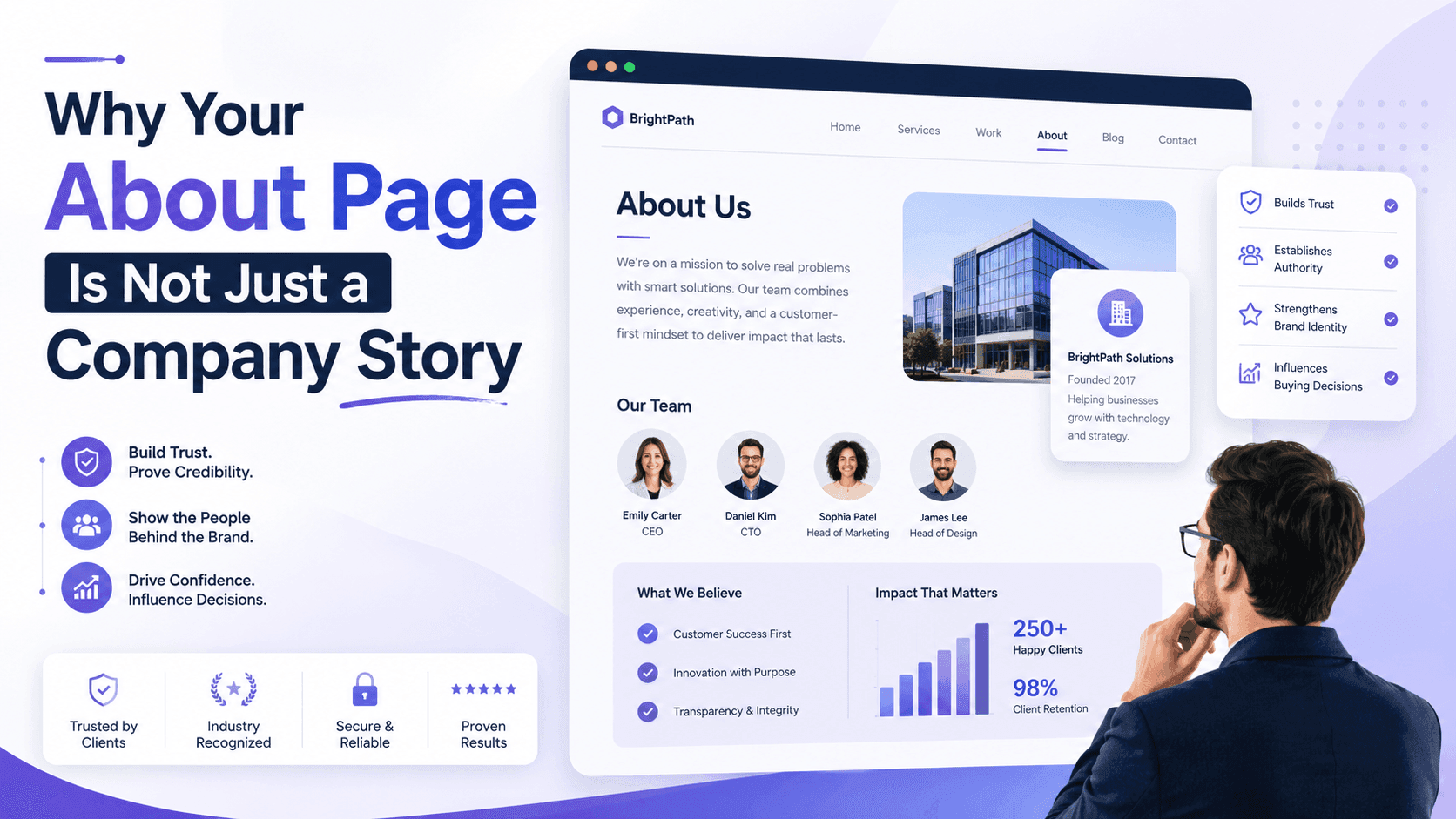


A strong brand does two jobs at the same time. It helps customers recognize a business quickly, and it builds confidence that the business is credible, consistent, and worth choosing.
That is why a brand identity redesign is rarely just a visual project. When done well, it becomes a business upgrade. It brings clarity to messaging, removes inconsistency across channels, and creates a system that teams can maintain as the company grows.
This checklist is designed for businesses that want structure without overcomplicating things. It is written for founders, marketing teams, sales leaders, and operators who need a clear plan, not design theory.
When A Brand Identity Redesign Is The Right Move
Some businesses redesign too early. Others wait too long and pay for it through lost trust, weak conversion rates, and inconsistent marketing. The decision becomes easier when the signals are obvious.
Common signals that the brand is holding the business back
A redesign is usually worth serious consideration when several of these are true:
- The website and sales materials feel “less premium” than the actual service quality.
- The brand looks inconsistent across teams, channels, and formats.
- Customers do not understand the offer quickly, even after reading the homepage.
- The business expanded into new services or markets, but the identity still signals an older version of the company.
- Competitors appear clearer and more modern, even if their delivery is not better.
- New hires, partners, or freelancers keep asking basic questions like “Which logo version should we use?”
A brand identity redesign becomes especially important when the business is moving upmarket. Higher-value buyers tend to judge fast, and visual inconsistency often reads as operational inconsistency.
Refresh vs redesign
Not every brand needs a full rebuild.
A refresh often works when the brand is recognizable but needs polish and better rules. A redesign is more suitable when positioning, messaging, and identity all need to evolve together.
A quick decision filter:
- If the business is the same, but the identity looks outdated, start with a refresh.
- If the business changed meaningfully, start with a redesign that includes strategy and messaging.
Preparation Checklist That Prevents Expensive Rework
Redesigns feel slow at the beginning for a reason. When early decisions are vague, the project becomes revision-heavy later.
Business goals need to be clear, not inspirational
Before any creative work begins, the project needs a practical goal list. These goals should be specific enough to guide decisions.
Examples of useful goals:
- Improve clarity so first-time visitors understand the offer within 10 seconds.
- Support a move upmarket with a more confident, premium identity.
- Create a consistent system for website, sales assets, and social.
- Make templates so non-designers can produce on-brand material.
- Align product UI and marketing visuals so the experience feels unified.
Avoid goals like “make it modern.” “Modern” means different things to different people and leads to subjective feedback loops.
Touchpoint audit that shows reality
A simple touchpoint audit often reveals why the brand feels inconsistent. Gather real examples in one shared folder:
- Website pages, landing pages, blog layout
- Social profiles and recent posts
- Pitch decks, proposals, case studies
- Email templates, newsletters, email signatures
- Product screens, dashboards, onboarding flows
- Ads, banners, thumbnails
- PDFs, documents, invoices, client-facing files
Then label each item with a quick note:
- What works
- What feels off
- What is inconsistent
- What must be updated first after the redesign
This prevents a common problem where a brand looks “updated” on the homepage but still looks old everywhere else.
Decision-making structure
A redesign stalls when too many people approve every detail. A practical approval structure usually includes:
- One business owner or senior leader as final decision-maker
- One marketing lead who owns messaging and consistency
- One product lead if a digital product is involved
- One design lead or agency lead who owns the system and execution
Feedback should be grouped and translated into decisions, not scattered across meetings.
Brand Foundation Checklist
This is the base layer that keeps the redesign from becoming “just visuals.” Even a short foundation document can guide the entire project.
Positioning snapshot
A positioning snapshot should answer these questions:
- Who is the primary audience?
- What problem is being solved?
- What outcomes does the business deliver?
- Why should a buyer trust this business over alternatives?
- What makes the approach different or better?
A simple positioning statement format:
This business helps (audience) achieve (outcome) through (approach), with a focus on (differentiator).
The goal is not to write something clever. The goal is to write something true and usable.
Audience clarity
Most brands try to speak to everyone, and the identity becomes generic.
This section should define:
- Primary buyer type
- Secondary buyer type
- What each buyer cares about most (risk, speed, price, quality, support)
- What language the buyer uses when describing the problem
When this is done properly, messaging becomes sharper and design decisions become easier.
Brand personality
Pick 3 to 5 traits only. Too many traits become meaningless.
Examples that work well for professional services:
- Confident
- Clear
- Practical
- Premium
- Approachable
Each trait should include a boundary. For example:
Approachable, not casual.
Premium, not cold.
Confident, not aggressive.
What stays and what changes
Many businesses remove recognizable elements and later regret it. This checklist step reduces that risk.
- What do customers already recognize?
- What do customers already trust?
- What assets are performing well today?
- What elements feel outdated or inconsistent?
A thoughtful brand identity redesign keeps continuity where it matters, while improving what is limiting growth.
Messaging Checklist That Makes The Identity Work In Real Life
A brand can look good and still fail if the messaging is unclear. Buyers do not “buy the logo.” They buy the story, the offer, and the proof.
Core messaging blocks
At minimum, define these blocks before design work moves too far:
- Primary homepage headline
- Subheadline that explains the offer
- 3 to 5 outcomes the business delivers
- Proof points (metrics, process credibility, years, case study signals)
- Short “about” paragraph that matches the new tone
If the business has multiple services, each service should have a one-line description and a short outcome-based pitch.
Voice and tone mini guide
This should be short enough to use daily.
A practical voice guide often includes:
- Sentence length preference (short and clear)
- Words to avoid (buzzwords and vague claims)
- Examples of on-brand phrases
- Examples of off-brand phrases
Many teams keep this section lightweight and collaborate with internal content teams or partners to maintain consistency across web pages, sales decks, and social assets. A light contribution from experts in voice alignment and copy consistency can be useful here, especially when multiple people create brand content across different channels.
Visual Identity Checklist
This is where most teams spend the most time, and it is where structure matters most.
Logo system
A logo is not one file. It is a system that must work across sizes, surfaces, and contexts.
Logo checklist:
- Primary logo version
- Secondary logo version (stacked or simplified)
- Icon or mark that works in small sizes
- Black and white versions
- Light and dark background versions
- Clear spacing rules
- Minimum size rules
- Incorrect usage examples (stretching, changing colors, adding effects)
For many businesses, this step overlaps naturally with logo design and redesign work, especially if the existing mark has recognition but needs refinement rather than replacement.
Typography
Typography carries personality. It also carries readability.
Typography checklist:
- Heading font and body font selected for readability
- Clear hierarchy for H1, H2, H3, body text
- Font weights defined (regular, medium, bold)
- Line spacing and paragraph spacing rules defined
- Mobile readability tested
Typography should support long-form pages and not only hero sections.
Color system
Colors need rules, not just preferences.
Color checklist:
- Primary colors (1 to 2)
- Secondary colors for flexibility (2 to 4)
- Neutral palette for backgrounds and text
- Accessibility contrast checks for text
- UI states defined if product design is involved (success, warning, error)
A strong palette is designed for real usage: websites, decks, documents, social templates, and product UI.
Imagery and graphic elements
This is often where brands quietly fall apart after launch. A business updates the logo, but photos, icons, and graphics remain inconsistent.
Imagery checklist:
- Photography style defined (subject, lighting, tone)
- Illustration style defined if used
- Icon style rules defined (line weight, corner radius, filled vs outline)
- Graphic shapes or patterns defined if part of the system
- Examples of correct and incorrect visual usage included
Mid-Project Checkpoint That Keeps The Redesign On Track
At some point, most redesigns hit a predictable issue: feedback becomes personal preference. That is usually a sign that goals and criteria are not being used properly.
A helpful checkpoint is to ask:
- Does the work match the positioning and audience?
- Does it support the personality traits agreed earlier?
- Is the system repeatable for future pages and assets?
- Will a non-designer be able to use the templates?
When a business wants a clearer process, structured deliverables, and rollout support, it can be faster to involve a partner. For teams aiming to move quickly without losing quality, contact Trifleck for brand identity redesign support at this stage, so the project stays aligned with business goals and does not drift into endless revisions.
Brand Guidelines Checklist That Teams Actually Use
A guideline document is successful when people use it without asking questions.
What guidelines should include
Core sections that help teams daily:
- Logo usage rules with visual examples
- Color codes and usage rules
- Typography rules and hierarchy
- Spacing and layout principles
- Icon and imagery rules
- Writing tone mini guide
- Template examples for common assets
- File naming and where assets live
Template pack that supports day-to-day work
Templates are where consistency becomes real.
Templates to prioritize:
- Sales deck template
- Proposal template
- Case study layout
- Social post formats (3 to 6)
- Email header or newsletter layout
- Document header and footer styles
A practical template pack reduces dependence on designers and keeps the brand consistent even when deadlines are tight.
Asset library setup
A clear folder system prevents old assets from spreading again:
- Approved current assets
- Templates
- Brand guidelines
- Archive of old assets (restricted for historical use)
This prevents accidental “mixing” of old and new elements during rollout.
Website Alignment Checklist
For many businesses, the website becomes the main proof of credibility. If the site is not updated properly, the redesign will not “feel real” to buyers.
Page priority list
Start with the pages that influence decisions most:
- Homepage
- Core service pages
- About page
- Case studies or portfolio
- Contact page
- Key landing pages tied to lead generation
Then update:
- Blog layout and content templates
- Secondary pages and support pages
This is where website design and development often becomes part of the same roadmap, so the new identity is applied consistently across layouts, components, and performance needs.
On-page consistency checks
Before launch, check:
- Button styles and hover states
- Form layouts and validation messages
- Icon usage and visual consistency
- Spacing, margins, and line lengths
- Mobile layouts for key pages
Small inconsistencies are easy to miss and they reduce trust quickly.
Product and UI Alignment Checklist
If the business has a digital product, the redesign should not stop at marketing assets. Otherwise, users experience a split personality: the website looks fresh, but the product feels outdated.
UI alignment checklist:
- UI colors mapped to the brand system
- Typography and spacing aligned where possible
- Components updated for consistency (buttons, inputs, modals)
- Microcopy tone aligned (labels, errors, onboarding text)
- Icon style consistent across product and marketing
This is where UI UX design services commonly overlap with branding efforts, especially for companies with SaaS dashboards, mobile apps, or onboarding flows.
Rollout Checklist That Avoids Confusion
A rollout plan prevents the brand from existing in two versions for months.
Decide on rollout style
Two common options:
- Full launch (everything updated at once)
- Phased rollout (high-visibility touchpoints first)
Phased rollout often reduces risk for small teams. It also allows improvements after the first wave.
Internal rollout checklist
Before external updates go live:
- New templates distributed to teams
- Brand guideline shared and accessible
- Old assets archived and removed from shared folders
- Social and sales teams briefed on the new message and tone
External rollout checklist
When the brand goes public:
- Website updated
- Social profile images updated
- New sales assets live
- Key landing pages refreshed
- A short public explanation prepared if the change is noticeable
Public messaging should be simple and business-focused. No long storytelling is needed.
Quality Checks Before Going Live
This stage protects the business from small issues that create a “rushed” impression.
Consistency and usability checks
- Logo looks correct across all placements
- Typography remains readable on mobile devices
- Color contrast meets basic accessibility needs
- Templates match the guidelines
- Key pages feel like one system, not separate designs
Legal and operational checks
Depending on the business, also confirm:
- Trademark considerations for new marks
- Updated privacy and footer information if the website changes structure
- Updates to documents and contracts that include the old brand
Common Mistakes That Reduce The Value Of A Redesign
Treating the redesign like a logo project
A logo can improve recognition, but it rarely fixes clarity, conversion, or consistency on its own. The real value comes from the system.
Allowing unlimited feedback loops
Feedback must be tied to goals. Otherwise, the project becomes personal preference and slows down.
Skipping templates and guidelines
Brands drift when there are no rules people can follow. Templates and guidelines are what keep the brand consistent long after launch.
Updating the homepage and ignoring everything else
A redesign looks incomplete when proposals, decks, PDFs, and social templates still use old elements. Buyers notice, especially in B2B.
A Realistic Timeline and Ownership Plan
Timelines vary based on scope, but most projects follow similar stages. The key is to assign ownership and set clear deliverables.
A typical roadmap:
| Stage | Focus | Typical duration |
| Discovery | audit, goals, audience, positioning | 1 to 2 weeks |
| Messaging | core message, tone, proof points | 1 to 2 weeks |
| Identity design | logo system, color, typography, visual rules | 2 to 4 weeks |
| Guidelines and templates | rules, examples, real templates | 1 to 2 weeks |
| Rollout | website, assets, updates, launch | 1 to 3 weeks |
A full brand identity redesign can be shorter or longer depending on the number of touchpoints and how fast approvals move. What matters most is not speed. It is clarity and repeatability.
Final Checklist That Can Be Copied Into A Project Board
Strategy and foundation
- Clear reason for the redesign written in plain language
- Touchpoint audit collected and reviewed
- Positioning snapshot approved
- Audience priorities defined
- Brand personality traits finalized
- What stays and what changes documented
Messaging
- Homepage headline and supporting message finalized
- Service descriptions written simply
- Benefits and proof points listed
- Voice and tone mini guide created
Visual identity
- Logo system built with variants and usage rules
- Typography hierarchy defined and tested
- Color system built with neutrals and contrast checks
- Imagery, icon, and graphic rules documented
Guidelines and templates
- Guidelines include correct and incorrect examples
- Template pack built for sales and marketing assets
- Asset library organized and old files archived
Rollout
- Rollout plan selected and scheduled
- Website pages updated in priority order
- Sales and social assets updated
- Teams briefed and trained on templates and rules
Conclusion
Businesses do not invest in a redesign for decoration. They invest to improve clarity, trust, and consistency, and to present the company at the level it already operates.
A successful brand identity redesign creates a system that teams can use without guessing. It supports marketing, strengthens sales assets, and helps the business look as reliable as it truly is.
For companies that want a structured approach, from foundation and messaging to identity and rollout, Trifleck can support the full brand identity redesign process with clear deliverables, repeatable guidelines, and assets built for real-world use.