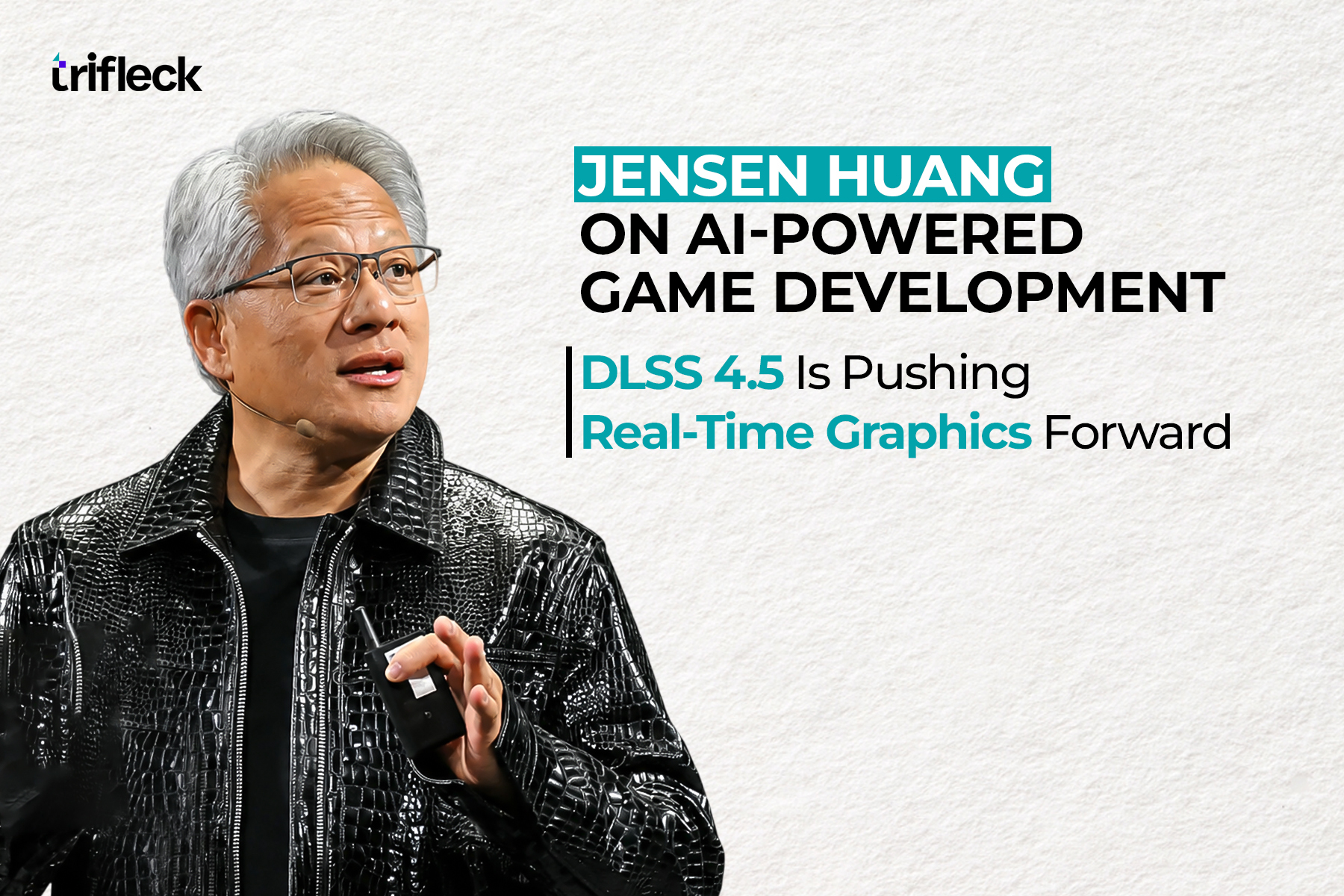
Everyone is going to talk about the GPUs from COMPUTEX 2026.
But the real story from Jensen Huang is not hardware.
It is the quiet but very deliberate shift in what a personal computer is supposed to be.
NVIDIA did not just announce new products this year. It pushed a clear direction.
Your next PC will not just run software. It will run AI agents. Locally. Continuously. Privately.
That idea sits at the center of RTX Spark.
On the surface, RTX Spark looks like a performance jump. Blackwell-based RTX GPU, Grace CPU, unified memory, and massive AI compute packed into slim laptops and compact desktops.
But that misses the real shift.
RTX Spark is NVIDIA betting that the next generation of computing is not app-centric. It is agent-centric.
Not cloud dependent.
Not add-on AI features.
But always-on intelligence running inside your machine.
That changes what a PC actually is.
Because if this direction holds, your computer stops being a tool you operate and starts behaving more like a teammate that can think, execute, and adapt alongside you.
That is a very different computing model.
And NVIDIA is not hinting at it anymore. It is building for it.
The same shift shows up in DLSS 4.5 Ray Reconstruction.
Instead of relying on traditional rendering denoisers, NVIDIA is leaning into AI models that reconstruct visual output in real time. Better lighting, more stable motion, and cleaner ray-traced scenes are no longer handcrafted. They are inferred.
When you see Blender 5.3 adopting this direction, it becomes clear this is not just gaming innovation. It is a full creative pipeline shift.
At the same time, the RTX ecosystem has crossed a major threshold with more than 1,000 games and apps now accelerated. Another 11 major titles are adopting DLSS 4.5 support. What was once a premium feature is now becoming a default expectation in modern game development.
But the more overlooked shift is happening outside graphics.
Local AI agents are being pushed hard across RTX and DGX systems. Performance gains in frameworks like llama.cpp and vLLM are doubling in some cases. New tooling like OpenShell is focused on making on-device agents secure, practical, and easier to deploy inside Windows environments.
Even creative software is being rebuilt around this assumption. Adobe and Blender are moving toward workflows where iteration is nearly real time, not batch processed. The bottleneck is shifting from compute to imagination.
So here is the real takeaway.
We are no longer just in the GPU era.
We are entering the agent computing era.
A world where your machine is not just rendering pixels or compiling code.
It is running intelligence.
And COMPUTEX 2026 did not feel like a product showcase.
It felt like a line being drawn toward that future.
Whether the industry is ready or not, the direction is already set.