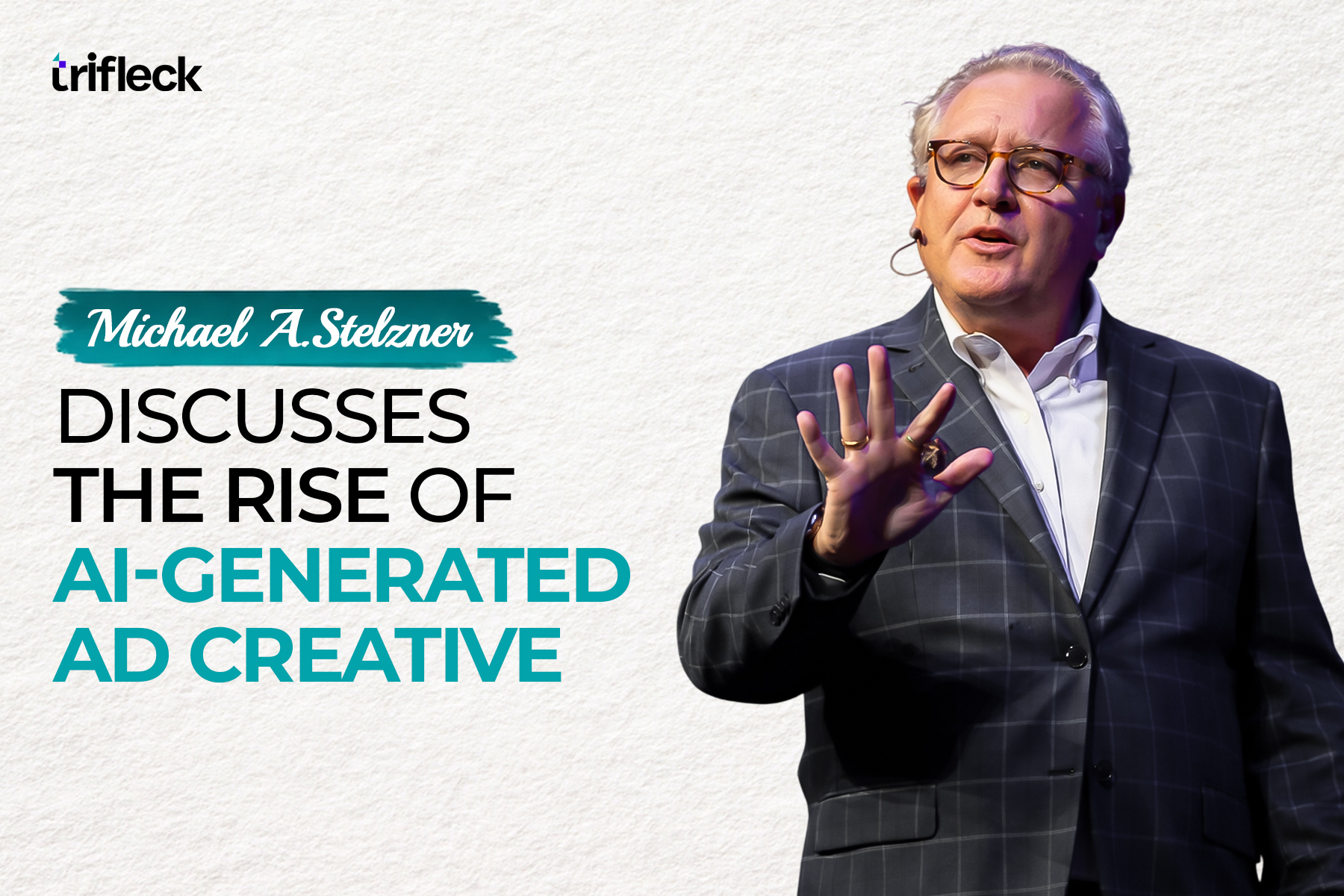
AI-generated ad creative is no longer sitting on the edge of advertising. It is moving into the center of it.
What Michael Stelzner highlights in this discussion is not just a new set of tools marketers can play with. It is a real shift in how creative production is starting to work across major ad platforms. The old process of waiting on creators, revising one asset at a time, and slowly testing small variations is starting to look outdated next to what AI can now produce.
That is what makes this conversation worth paying attention to.
One of the clearest takeaways is speed. Traditional UGC workflows can drag. A brand briefs a creator, waits for availability, reviews drafts, requests changes, and finally gets one usable version. Then the process starts again for the next variation. AI changes that rhythm completely. Instead of building creative one piece at a time, advertisers can now generate volume much faster and test more angles without being stuck in the same slow loop.
But this is not only about doing more work in less time.
It is also about matching the direction of the platforms themselves. Meta, Google, and TikTok are all pushing AI deeper into their ad ecosystems. That matters because the platforms are increasingly rewarding creative variation. A single idea delivered in different styles, settings, and formats gives the algorithm more to work with. In that kind of environment, the advertiser with more creative range has a real advantage.
What makes the original discussion especially useful is that it does not treat AI like a magic shortcut. It also brings up the discomfort that many brands still feel, and honestly, that hesitation makes sense. Not every business can treat AI-generated people the same way. In some industries, it may be low risk. In others, where real appearance, fit, or visual trust matters to the buying decision, brands have to be more careful.
The compliance point is important too. AI does not erase the rules. If a claim would be misleading with a human creator, it is still misleading with an AI persona. That part of the conversation is refreshing because it brings the focus back to responsible execution instead of hype.
Another thing that stands out is how practical the workflow has become. This is not just about making random images. Advertisers can now build consistent personas, adapt proven ad formats, create native-looking image ads, and even generate video sequences in ways that would have felt unrealistic not long ago. The gap between idea and output is getting smaller.
That is really the heart of this shift.
AI-generated creative is not replacing marketing judgment. It is removing some of the production drag that used to slow good ideas down.
And for teams still treating it like a distant trend, that delay may become more expensive than the tools themselves.
For a fuller look at Michael Stelzner’s discussion on this shift, see the full article here.