Game engines used to be judged mostly by what they could show on screen.
Sharper visuals. Larger worlds. More realistic lighting. Better performance.
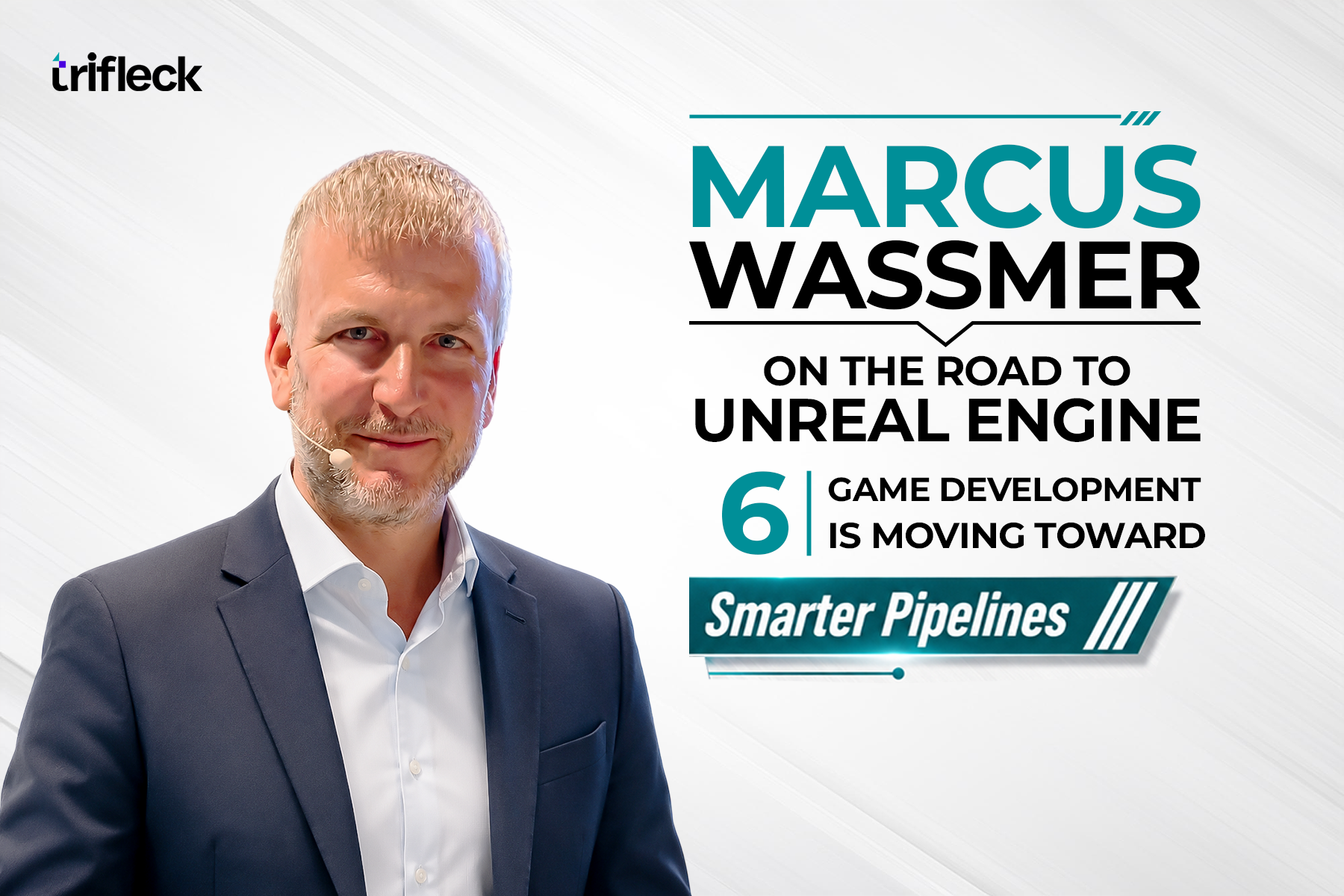
Marcus Wassmer’s update on the road to Unreal Engine 6 points to a bigger shift. The future of game development is not only about making games look better. It is about helping teams build, ship, update, and manage games more intelligently.
That matters because modern games are no longer one-time releases. They are living products. They need regular updates, creator tools, cross-platform support, shared assets, online systems, player communities, and faster production cycles.
Unreal Engine 6 appears to be built around that reality.
Epic is bringing Unreal Engine 5 and Unreal Editor for Fortnite closer together into one connected foundation. That means the professional game development side and the creator-focused Fortnite ecosystem are moving toward the same engine base.
The bigger idea is simple:
One of the most important parts of the UE6 direction is the focus on smarter pipelines. Instead of only giving developers more powerful tools, Epic is trying to reduce the heavy manual work that slows teams down.
AI fits into this direction, but not in the overhyped way.
The point is not that AI will replace game developers. The point is that AI can help with repetitive production tasks, such as testing, setup, debugging, asset handling, lighting checks, and internal tools.
That can give artists, designers, and engineers more time to focus on the actual experience.
Another major part of the shift is portability. Epic wants content, code, and even player-owned items to work more easily across different games and systems. Fortnite cosmetics are one example of this direction.
That could make game assets feel less locked inside one world.
Instead of every game starting from scratch, developers may be able to reuse smarter systems, shared formats, and connected assets. For players, it could mean digital items and identities that carry more value across different experiences.
Still, this shift will not be simple.
Studios already have projects built in older systems. Moving toward new workflows, new programming models, and new content structures can create pressure. Epic will need to make sure the transition feels practical, not disruptive.
That is the real test for Unreal Engine 6.
Better graphics will always matter. But the bigger opportunity is helping game teams work faster, collaborate better, update more smoothly, and build games that can keep growing after launch.
Unreal Engine 6 is not just pointing toward better-looking games.
It is pointing toward a smarter way to make them.