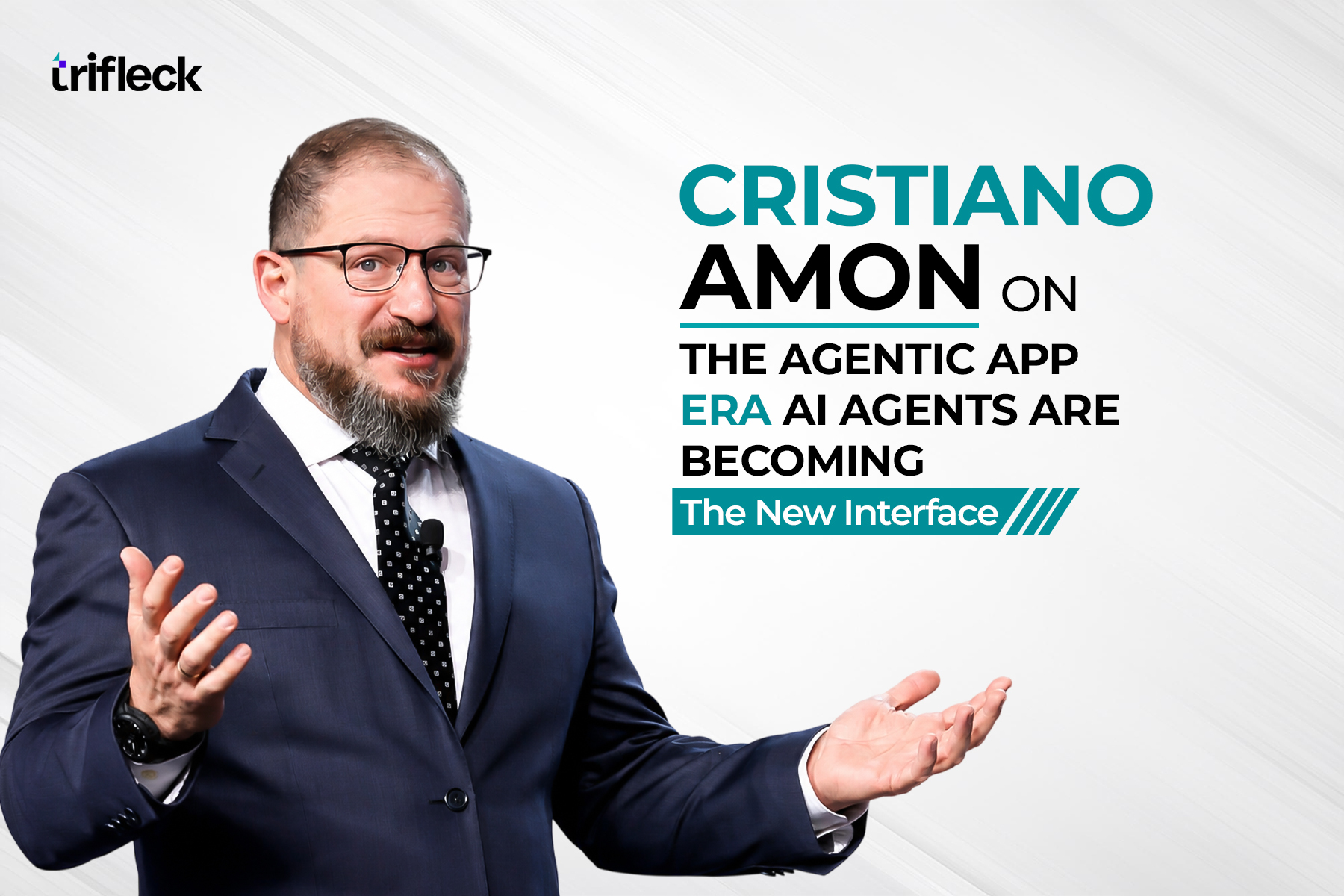
Cristiano Amon is making a bigger argument than another round of “AI will change everything.”
He is pointing at a shift in control.
For the last decade, the app has been the operating unit of digital life. Consumers learned to move from icon to icon: banking, calendar, maps, payments, travel, work. Each app owned a small part of the journey. Each company fought for screen time, notifications, and placement on the phone.
Amon’s view is that AI agents could break that pattern. The user may not need to open five apps to complete five tasks. They may ask an agent to handle the job, while the apps become services running in the background.
The app does not vanish. It loses the front seat.
That distinction matters. If the agent becomes the main interface, the most valuable layer in the stack changes. The battle moves away from the app screen and toward the system that understands intent, chooses the right service, and acts on behalf of the user.
Qualcomm has a direct stake in that future. Amon says the company is working on more than 40 AI device designs, covering smart glasses, earbuds with cameras, pins, pendants, watches, and other wearable formats. The ambition is not just to put chips into more gadgets. It is to support devices that can give agents real-world context.
A phone can process a request. A wearable can understand the moment around it.
Smart glasses are central to the conversation because they sit close to the user’s eyes, ears, and environment. Amon believes the category could grow from tens of millions of units to hundreds of millions within a few years. If that happens, glasses may become one of the most important AI interfaces, not a niche accessory.
The hardware race also explains the sudden interest from AI companies. Owning the model is powerful. Owning the device closest to the user may be even more valuable. The endpoint shapes the experience, the data, and the default behavior of the agent.
Privacy remains the uncomfortable part of the story. Agentic devices that can see, hear, and remember more of daily life may deliver better personalization, but they also create a deeper trust problem. Professionals and consumers will expect useful AI, but not at the cost of feeling watched by the tools around them.
Supply is another constraint. Amon has been blunt about memory shortages, with pressure likely to stretch into 2027 or later. The market can imagine an agent-first future faster than the industry can manufacture all the infrastructure behind it.
Amon’s prediction may serve Qualcomm’s commercial interests, and that should be kept in mind. Still, the direction is hard to dismiss.
Apps defined the mobile era.
Agents may define what comes next.