Get a FREE App or Website Cost Estimate Within 24 Hours. Request Yours Today
Logo

EdTech App Development

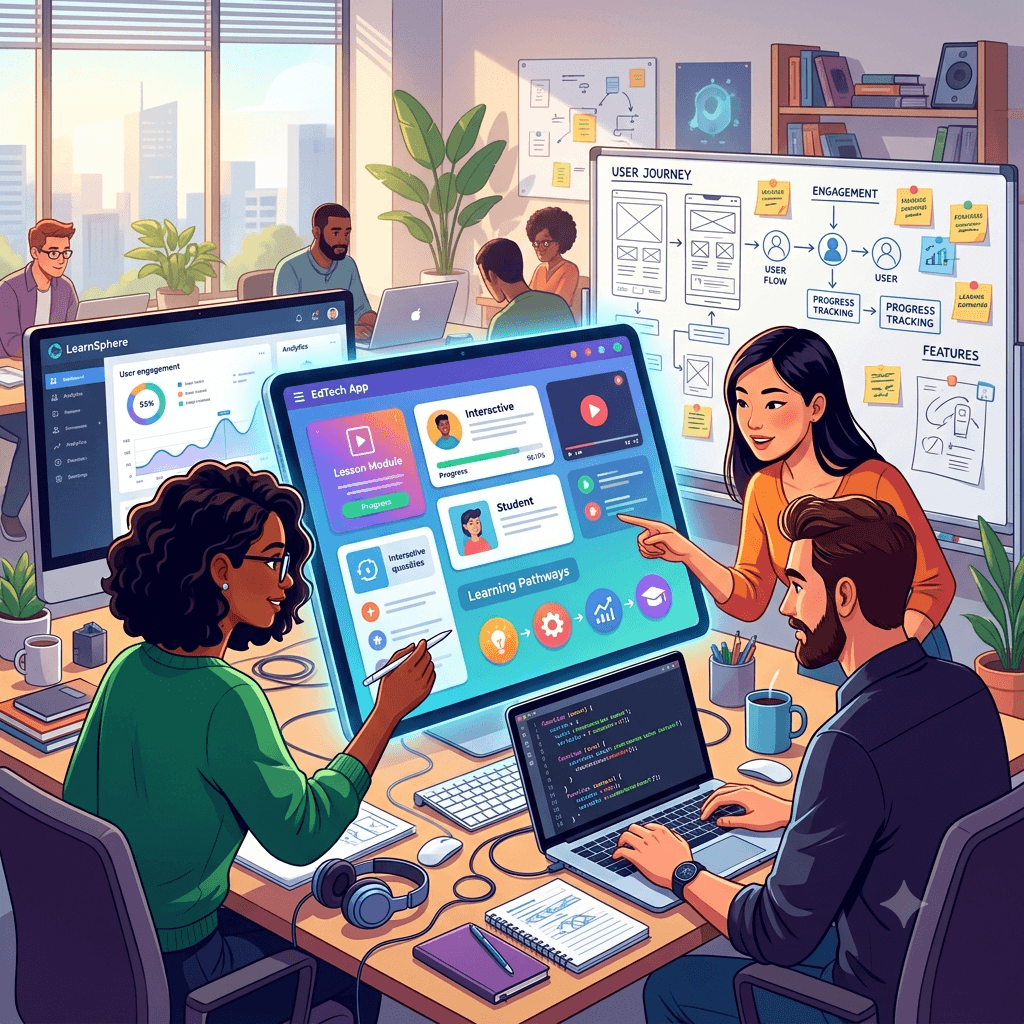
Education has shifted to digital platforms, but many products fail when real users begin interacting with them. At Trifleck, our edtech app development focuses on how students learn, how educators teach, and how systems perform under real usage. Instead of building feature-heavy platforms, we create systems that support engagement, retention, and long-term scalability.

EdTech App Development

Where Most EdTech Apps Break Down

Many learning platforms perform well in demos. The problems begin when students, teachers, and administrators start using them daily.

A student will not continue using an app if navigation feels confusing. A teacher will not rely on a system that slows down content delivery. Admin teams cannot manage learning operations if reporting is delayed or fragmented.

The issue is rarely the idea. It is the execution.

Most online education app development projects miss three critical layers:

  • Alignment with real learning behavior
  • Seamless integration with content, video, and user systems
  • Performance under high user activity

This is why many businesses revisit edtech platform development after their initial product struggles to scale.

EdTech App Development Solutions We Offer

Every learning platform operates differently. A university LMS behaves differently from a tutoring app or a corporate training system.

E Learning App Development

Platforms designed for structured digital learning where users access courses, track progress, and engage with content. Strong e learning app development ensures clarity in navigation, smooth content delivery, and consistent user experience.

Virtual Classroom App Development

Real-time learning environments require stable video, audio, and interaction systems. Our virtual classroom app development ensures seamless live sessions, chat integration, and recording without interruptions.

LMS Development Services

Learning Management Systems must support multiple roles without complexity. Our LMS development services focus on usability, reporting, and scalability across students, instructors, and administrators.

Student Management System Apps

Managing student data goes beyond storage. These systems track performance, attendance, and engagement. Well-built student management system apps allow institutions to operate efficiently without manual effort.

Tutoring App Development

One-on-one and group learning platforms require scheduling, communication, and payment systems to work together. Our tutoring app developmentensures smooth interaction between tutors and learners.

Mobile Learning App Development

Learning happens across devices. Our mobile learning app development focuses on speed, offline access, and continuity so users can switch devices without losing progress.

Educational Software Solutions

From backend systems to user-facing platforms, our educational software solutions are designed as connected ecosystems instead of isolated tools.

Build EdTech Platforms That Do Not Lose Users After Launch

A learning platform should support engagement, not create friction. Build systems that students return to and educators rely on.

Features That Actually Improve Learning Experience

Features alone do not create value. Their implementation does.

Student-Focused Features

  • Quick onboarding with guided flows
  • Personalized learning paths
  • Progress tracking and milestones
  • Interactive content and assessments

Educator-Focused Features

  • Course and content management tools
  • Live class controls and scheduling
  • Student performance tracking
  • Feedback and communication systems

Admin Controls

  • Centralized dashboards
  • Role-based access management
  • Reporting and analytics
  • Content and user management

Strong edtech app development is not about adding features. It is about reducing friction in every interaction.

EdTech UI UX Design That Feels Natural

Users do not analyze design. They respond to it.

Confusing layouts, long flows, and inconsistent navigation create hesitation. That hesitation leads to drop-offs.

Our UI UX approach focuses on:

  • Simplifying learning journeys
  • Reducing effort in content access
  • Creating visual clarity and consistency
  • Ensuring responsiveness across devices

Good design does not stand out. It removes resistance.

Process to Ensure Efficient Edtech App Developer

Most issues in edtech platform development start before development begins.

Our process is structured to avoid rework and system breakdowns.

1. Discovery

We analyze learning flows, user roles, and system requirements to align the platform with real usage.

2. User Experience

Interfaces are designed to reduce effort and improve engagement across students and educators.

3. Architecture and Integrations

We plan system connections with video tools, analytics platforms, and content systems.

4. Development

The platform is built using scalable technologies like React and cloud infrastructure to support growth.

5. Testing and Validation

We test real-world scenarios including concurrent users, content load, and interaction flows.

6. Deployment and Optimization

After launch, we refine performance based on actual user behavior and system data.

Technology We Use to Scale EdTech Apps

Learning platforms require systems that evolve continuously.

Frontend

  • React Native
  • Flutter

Backend

  • Node.js
  • Python

Cloud

  • AWS
  • Azure

EdTech Systems We Integrate With

EdTech platforms depend on connected systems to function effectively.

We integrate with:

  • Learning Management Systems
  • Video conferencing platforms
  • CRM and ERP systems
  • Payment gateways
  • Content delivery networks

This ensures consistent data flow and system reliability.

Why Teams Choose Trifleck

EdTech businesses need systems that perform consistently, not just appear complete.

Many companies offer edtech app development, but few focus on how platforms behave under real usage.

Here are outcomes achieved:

Increased student engagement by up to 3x across platforms

Improved course completion rates by over 45%

Reduced onboarding drop-offs by up to 50%

Built systems supporting thousands of concurrent learners

Improved platform performance and load times significantly

Let’s Build EdTech Platforms That Scale With Real Users

If you are planning online education app development, focus on building systems that support learning behavior.

Frequently Asked Questions

How do you structure an EdTech app for both students and teachers without making it complex?

The system is built around role-based access where each user type only sees what they need. In edtech app development, this means separating student learning flows, teacher content controls, and admin reporting into clean, independent layers so the platform feels simple instead of overloaded.

What is the biggest mistake companies make when scaling an EdTech platform?

Most platforms are built for launch, not growth. As user numbers increase, weak backend architecture leads to slow performance, data delays, and system crashes. Strong edtech app development accounts for scaling early by designing systems that handle high concurrency without restructuring later.

How do you ensure content loads quickly even with large video libraries?

Performance is handled through content delivery networks (CDNs), adaptive streaming, and optimized storage systems. Instead of loading full files, the platform streams content based on user bandwidth, which keeps video playback smooth even with large libraries.

Can an EdTech app support both live classes and recorded content effectively?

Yes, but both systems must be designed to work together. Live classes require real-time communication infrastructure, while recorded content needs optimized storage and playback. In well-planned edtech app development, users can switch between live and recorded sessions without friction.

How do you reduce student drop-off during onboarding?

Drop-off usually happens when onboarding feels long or confusing. The solution is progressive onboarding where users start learning quickly and complete setup gradually. Small changes in flow during edtech app development often lead to significant improvements in retention.

What makes a learning app feel engaging instead of repetitive?

Engagement comes from interaction and progression. Features like quizzes, milestones, and feedback loops create a sense of movement. In edtech app development, these elements are aligned with learning goals so they feel purposeful, not distracting.

How do you handle different learning speeds within the same platform?

The system uses adaptive learning paths where content adjusts based on user performance and progress. This allows faster learners to move ahead while others receive additional support, without disrupting the overall structure.

How do EdTech apps maintain performance during live sessions with many users?

Performance is managed through load balancing, distributed servers, and optimized streaming protocols. These systems ensure that video, audio, and interaction remain stable even when multiple sessions are running at the same time.